Cold plunge chiller cover: what to cover, and what not to
Nobody sells a cover for the chiller body, and that is the correct answer rather than a gap in the market - a condenser rejects heat through its fan. Here is what is worth covering, in the order it leaks heat.
Last verified · Ice & Cedar editorial
The verdict
Do not wrap the chiller. Shade it, shelter it, and give it clearance. A chiller is a refrigeration unit that moves heat out of your water and dumps it into the air through a fan and a finned condenser; restrict that airflow and you make the unit work harder and hold your water less cold. Of the eleven covers we compare, one covers equipment at all and it is a jacket for an inline filter housing, not for the chiller. What is worth covering, in descending order of how much heat it lets in: the water surface with an insulated lid, the tank wall with a sleeve, and the filter housing if you run one. The chiller gets a roof and open sides.
“Cold plunge chiller cover” is a search with two different intentions behind it, and they have opposite answers. If you mean something to protect the unit from weather, the answer is a shelter with airflow, and no manufacturer in this category sells one. If you mean something to insulate the cold side of the system, the answer is yes, urgently — but the chiller is the wrong part to insulate.
Here is the mechanism, because it settles both questions at once. A chiller does not make cold. It moves heat out of your water and rejects it into the air through a fan and a finned condenser. Anything that restricts airflow across that condenser, or that recirculates the warm air it just produced, reduces how much heat it can reject. The symptom is a unit that runs longer for the same water temperature, and in a sealed box on a hot day, a unit that cuts out on a high-pressure trip and leaves your water warm.
So the useful version of this question is “where is my setup actually gaining heat, and what can I cover?” The answer is almost never the chiller. It is the hundred-plus gallons of cold water with an open top face and bare walls sitting in ambient air for twenty-three hours a day, and the plumbing between them.
What a chiller enclosure actually needs
A roof, not walls. Rain off the top of the unit and out of the electrical connection, with the sides left open or louvred so air moves through. A deck box with the lid shut is the common mistake; the same deck box with the lid propped and two sides cut out is fine. If you are building something, treat it as you would an air-conditioner condenser, because that is what it is.
Clearance on the intake and exhaust faces. Every one of these units has a side it draws air in through and a side it blows warm air out of, and putting either against a wall is the quiet way to lose performance. Nothing in this category publishes a required clearance, so the honest guidance is the general refrigeration one: more than you think, and never into a corner where the exhaust loops back to the intake.
Off the ground. A paver, a plinth or a bracket, so the unit is not standing in the puddle it or the rain creates, and so leaves and grass clippings do not pack into the condenser fins. This is also the cheapest thing on this whole page.
And shade, which is the one genuinely free win. Direct sun on a condenser raises the air temperature it is rejecting heat into, which is exactly the thing that makes it less effective. A shade sail, an eave or the north side of the house costs nothing and does more for the unit than any cover would. Siting the whole setup in a garage solves weather, sun and noise at once, and is why so many owners end up there.
What the listings themselves say about weather is almost nothing. one of the eight standalone chillers we compare publishes an ingress rating, and the rest are silent on whether outdoor siting is supported at all. If yours is one of the silent ones, treat it as an indoor-or-sheltered appliance. Our chiller roundup lists what each one publishes, including this.
What to cover instead, in the order it leaks heat
1. The water surface. This is the big one and it is not close. An uncovered tub exchanges heat across its entire top face, all day, plus evaporative losses and everything that blows into it. An insulated lid is the single highest-value purchase for a chilled setup, and seven of the eleven covers we compare are lids of one kind or another. Our cover roundup ranks them on published construction.
2. The tank wall. The surface nobody covers. A stock tank or a hard-walled tub in afternoon sun is absorbing heat through its whole side, and oneproduct in this category addresses it — a neoprene sleeve that slips over the tank from below. The trade-off is practical rather than thermal: a wrapped tank has to be unwrapped to drain or to inspect for a leak.
3. The inline filter housing, if you run one. Small, specific, and more useful than it sounds. If your chiller circulates through an inline filter, that housing is a bare plastic cylinder holding your coldest water in room-temperature air, warming it on every pass and dripping condensation underneath itself. A twenty-dollar neoprene jacket fixes both. Whether you need a filter at all is worth settling first — seven of the eight chillers we compare claim filtration of their own.
4. The hoses, with the same logic and a caveat. Insulated hose is sold with some kits and sensible in principle, for the same reason the filter housing matters: it is cold water in warm air. The caveat is that it is a minor gain next to the lid, and that in freezing weather the right answer for a loop you are not using is to drain it rather than to insulate it.
And the honest limit on all of this: nobody publishes a number. Not one of the eleven covers we compare publishes a thermal resistance, a temperature hold or an energy saving, and one of the ten covers that use the word "insulated" do not name an insulating layer at all. The physics is not in doubt; the payback period is simply not computable from published data, and we would rather say so than model it.
The three covers worth buying
Ranked on published specifications. Select a row to jump to the full write-up. We have not tested these units — here is exactly what we do instead.
| # | Product | Covers | Insulation | R-value | Best for | Price |
|---|---|---|---|---|---|---|
| 1 | 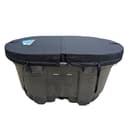 Polar Protector 100-Gallon Hard Insulated Cover The only cover here that names a rigid foam core and a six-point tie-down in the same listing. Foam plus a mechanical grip is the combination that survives wind, and wind is what lifts the cheap ones off. | The water surface | Expanded polystyrene (EPS) foam core | Not published | Cover the water first | $199.99 · View on Amazon Price as of October 10, 2026. #ad How we’re funded |
| 2 | 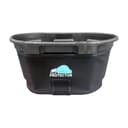 Polar Protector 100-Gallon 5 mm Neoprene Slip Sleeve Not a lid. This wraps the outside of the tank, which is the surface nobody covers and the one your chiller fights all afternoon in the sun. | The tank wall | Neoprene | Not published | Then the tank wall | $69.99 · View on Amazon Price as of October 10, 2026. #ad How we’re funded |
| 3 | 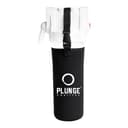 Plunge Crafters ChillGuard Filter Housing Sleeve The cover nobody searches for. If you run a chiller through an inline filter, that housing is a bare plastic radiator in your loop, and this is a twenty-dollar jacket for it. | The filter housing | Neoprene | Not published | Then the filter housing | $19.98 · View on Amazon Price as of October 10, 2026. #ad How we’re funded |
Listed in the order they reduce heat gain, not in order of price. None of these covers the chiller itself, because no such product exists and because a wrapped condenser is a worse condenser.
Frequently asked questions
Is there a cover made for a cold plunge chiller?
Not one that covers the chiller body, and we have looked. Of the eleven cold plunge covers we compare, one covers equipment at all and it is a jacket for an inline filter housing rather than for the chiller. That absence is not an oversight in the market - it is the right answer. A chiller is a refrigeration unit that rejects heat through a fan and a finned condenser, and anything that restricts that airflow makes the unit work harder, run hotter and hold your water less cold. The thing to build for a chiller is shade and shelter with clearance, not a wrap.
Can I leave my cold plunge chiller outside?
Many people do, and the listings mostly will not say whether you should. Exactly one of the eight standalone chillers we compare publishes an ingress rating - Healcryo states IPX4, which is splash resistance rather than submersion. Everything else in the category is silent, and silence is not permission. The practical arrangement is a roofed, open-sided position: rain off the top, air through the sides, the unit off the ground so it is not standing in a puddle, and the electrical connection somewhere that stays dry.
Why not just build a box around the chiller?
Because a sealed box turns the chiller's own waste heat into an oven it then has to work against. A refrigeration cycle moves heat out of your water and dumps it into the air around the condenser; if that air cannot leave, the condenser gets progressively less effective, the compressor runs longer for the same result, and in the worst case the unit cuts out on a high-pressure trip. If you want an enclosure for appearance or for noise, the rules are the same as for any outdoor condenser: generous clearance on the intake and exhaust faces, open or louvred sides, and a path for warm air to rise and leave. Shade is a genuine help. Enclosure without ventilation is not.
What should I cover instead?
In this order, because this is also the order of how much heat each one lets in. First the water surface, with an insulated lid - an open tub is gaining heat across its whole top face all day, and that is by far the largest leak in most setups. Second the tank wall, with a sleeve, which is the surface nobody covers and the one the sun actually heats. Third the inline filter housing if you run one, because it is a bare plastic radiator sitting in room-temperature air on every pass. The chiller comes last, and what it wants is shade and airflow rather than insulation.
Does a cover actually reduce running cost?
Almost certainly, and nobody in this category will tell you by how much. Not one of the eleven covers we compare publishes a thermal resistance, a temperature hold or an energy saving - and one of the ten covers that use the word "insulated" do not name an insulating layer at all. So the physics is sound and the payback period is not computable from published data. We say that rather than inventing a figure. It compounds with the other half of the problem: not one of the eight chillers publishes a rated wattage either, so there is no baseline to measure a saving against.
Will a chiller cover stop the noise?
Only partly, and the trade is usually bad. Compressor and fan noise is the thing owners most want to box in, and a box that reduces noise meaningfully is a box that restricts airflow meaningfully. The better levers are placement and isolation: put the unit where the noise is not pointed at a window, stand it on something that does not transmit vibration into a deck, and leave the clearance the manufacturer asks for. Our page on how loud a chiller actually is goes through what the listings publish - which is almost nothing.
Does the filter housing sleeve really matter?
It is the smallest and most specific item on this page and it does a real job. If your chiller circulates through an inline filter, that housing is a bare plastic cylinder of your coldest water sitting in warm air, warming on every pass and dripping condensation underneath itself. A neoprene jacket for about twenty dollars addresses both. one product in the whole category does this, and it is the least-searched item we compare and one of the more sensible ones.
What about winter - do I need to cover it then?
Winter is the easy season for the chiller and the hard one for everything else. The unit has less heat to reject, so it cycles less; what matters instead is that water left standing in hoses, a pump or a filter housing can freeze, and freezing water in a plumbed loop is how a cheap problem becomes an expensive one. If the setup is going to sit unused below freezing, drain the loop rather than insulate it. Our winter and maintenance pages cover the full shutdown routine.
Related
- Best cold plunge covers — eleven covers on published construction
- Cold plunge covers explained — what each class actually covers
- Best cold plunge chillers — including what each publishes about weather
- How loud is a cold plunge chiller? — before you box it in for quiet
- Cold plunge not getting cold — airflow is on the checklist
- Cold plunge in winter — when draining beats insulating
- Cold plunge in a garage — weather, sun and noise solved at once
- Do you need a filter on a cold plunge?
- Cold plunge maintenance — the routine around all of this
- What a cold plunge costs to run — and why it is a model, not a quote
Sources
- Seller listings for all 11 cold plunge covers and all 8 chillers we compare (Amazon detail pages) — Every construction, material, thickness and fit figure quoted here was read from the listings themselves on the dates shown on their cards in our roundups, where each listing is linked. The counts come from those published specifications: 1 of 11 covers covers equipment rather than water, 0 publish a thermal resistance, and 1 of 8 chillers publishes an ingress rating. No manufacturer in either category publishes a required clearance, an energy saving or a temperature-hold figure, so none is given here - the airflow argument is refrigeration physics, not a quoted spec. (accessed 2026-10-11)