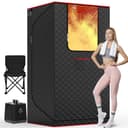
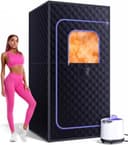
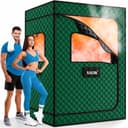
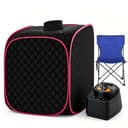
Assembled height first, checked against how you want to sit. This is the specification most likely to ruin the purchase and the one most often buried. A full-size tent stands around 5.9–6 feet, so most adults can stand up in it; the cheapest tent here stands 40.5 inches, which means you sit on the chair with your head out the top and you cannot stand at all. Neither is wrong — a seated tent is fine if that is what you expect — but finding out after the box arrives is a bad afternoon. 4 of the 6 listings here publish their assembled dimensions; treat the ones that do not as a question to ask before you pay.
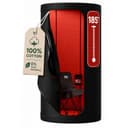
Then the temperature, both what it reaches and what kind it is. The two steam tents here that publish a maximum top out at 130°F and 140°F of humid heat, and that spread matters more than it looks: a tent capped at 130°F runs gentler, while one that reaches 140°F is closer to a warm sauna. The other three publish no maximum at all, which is itself the finding. None of them approaches the 185°F the dry hot-air Pod reaches, or the 150–195°F of a traditional steam room. Steam heat feels hotter than the number suggests because the humidity stops your sweat evaporating; dry heat lets you tolerate a higher number for longer. Decide which you are actually after before you compare the figures.
Then the steamer: wattage and tank size together. The wattage sets how fast it warms up and the tank size sets how long it runs before it needs a refill. A 1,000W / 2.6L unit is slower and shorter than a 1,500W / 4L one, and in a full-size standing tent the bigger steamer earns its place. On a two-person tent, look for two steamers rather than one working twice as hard — a single small generator cannot hold temperature across a footprint built for two.
Then the timer and the auto shut-off, which together are the only real safety feature in the category. You are sitting beside an appliance that boils water, and it is entirely plausible you doze off. Every steamer here claims to cut its own power when the tank boils dry; the better listings also publish a session timer with a stated maximum, so the whole thing stops on a schedule rather than only when the water runs out. A published timer with a stated shut-off is worth more than any detox claim on the same page.
Then the fabric, because it is what you breathe. These are sealed spaces filled with hot vapor, so the material matters. A single listing here names a fabric rather than a property — the dry pod’s wax-treated natural cotton canvas. Every tent says “waterproof” and stops there. It is not something you can verify from a listing, but a seller who addresses it at all is telling you something, and a brand-new tent that smells strongly of plastic on first heat-up is worth airing out before you sit in it.
Ignore the calorie and detox figures completely. They are the loudest thing on nearly every one of these listings and the least supported. Nothing published with any of these products substantiates a calorie burn or a detox effect, and a number printed on a box is not evidence. Buy on height, heat, steamer and timer — the four things you can actually check.