Will a sauna help with back pain?
Probably more than a cold plunge will, if your back is stiff rather than flared. But twenty minutes sitting unsupported on a wooden bench is its own back problem - and that is the part to solve.
Last verified · Ice & Cedar editorial
The verdict
For a stiff, tense back, heat is the right half of the pair — and the form factor matters more than the heat source. A sauna warms superficial tissue and most people feel looser afterwards, which is the same broad logic as a heating pad. It does not reach a disc, and it is not a treatment for a spinal problem. The thing almost nobody mentions: sitting upright on a hard bench with no back support for twenty minutes is a back-loading posture, which is why an infrared blanket — where you lie flat with the element against your lumbar region — suits many back sufferers better than a cabin does. Cap sessions at ten to fifteen minutes, do your stretching afterwards in a normal room, and treat numbness, leg pain, weakness or any bladder or bowel change as a doctor's question. This page is not medical advice.
Of the two halves of contrast therapy, heat is the one most people with long-standing back discomfort prefer, and the conventional rule of thumb explains why: cold for an acute flare, heat for stiffness. Most persistent back pain is a stiffness-and-tension problem rather than an acute inflammatory one, so heat is usually the more comfortable choice — the same qualitative advice anyone gets about a heating pad versus an ice pack.
A sauna is a whole-body version of that. It warms skin and superficial tissue, it produces a relaxation response most people notice, and the fifteen quiet minutes are a real part of the effect rather than a rounding error. What it does not do is change the temperature of a disc or a deep stabilising muscle — those sit under a substantial layer of tissue, and nothing you can comfortably sit in is reaching them. We describe all of this in the general, qualitative terms the evidence supports, and nothing here is medical advice.
Which leaves the question that actually decides whether a sauna helps your back: can you be comfortable in it for fifteen minutes? For a lot of people the honest answer in a traditional cabin is no, and the reason is the bench.
The bench is the problem nobody mentions
A sauna bench is a flat plank. You sit on it upright, unsupported, weight on your tailbone, for as long as the session lasts. If you have ever been told that sitting is the posture that aggravates your lower back, you have already been told what is wrong with this.
There are three ways out of it, and they are all worth considering before you spend anything:
- Lie down. On an upper bench if the cabin is long enough, or in an infrared blanket, which is lying down by design. Flat and fully supported, with the element against the part that hurts.
- Support your back. A backrest, a rolled towel in the lumbar curve, or a cabin with a sloped back panel. Our bench guide covers heights and depths, which is the same geometry problem from the building side.
- Shorten the session and do two rounds. Ten minutes, out, move around, ten more. Easier on your back than fifteen continuous minutes, and arguably a better sauna anyway.
Nothing in the registry publishes a backrest angle or a bench depth, so we are not going to rank cabins on back support — that would be inventing a spec. What we can say is which form factors put you horizontal, and that is what the picks below are sorted on.
Dose: the limit is posture, not heat
Ten to fifteen minutes is a complete session, and for a sore back the binding constraint usually arrives before the heat does. The signal to finish is postural rather than thermal: if you are slumping, shifting constantly or propping yourself on your hands, your back has had enough regardless of how the heat feels.
Two short rounds beat one long one here, which is a different recommendation from the one you will read elsewhere on this site for general sauna use. The general numbers — temperature bands, session lengths, frequency — are on sauna temperature and duration and how often should you use a sauna. Hydration matters more than most people expect, especially across two rounds: sauna and hydration has that.
Do not stretch hard in there
This is the one piece of advice on this page we would push back on if someone recommended the opposite. Warm tissue feelsmore extensible, and the heat plus the relaxation dulls the feedback that normally tells you to stop — which makes a sauna an unusually easy place to take a joint further than you should, and a sore back an unusually easy thing to aggravate while feeling great about it.
Gentle movement is fine. Keep anything you do in there inside a range you could reach cold, and do your real mobility work afterwards in a normal room where you can feel what you are doing. The same caution applies to the sequencing with cold: do not finish a contrast round in cold water and then stretch, because cold tissue is stiffer, not looser — see sauna before or after cold plunge.
What we would actually buy for this
Ranked on published specifications. Select a row to jump to the full write-up. We have not tested these units — here is exactly what we do instead.
| # | Product | Best for | Price |
|---|---|---|---|
| 1 | 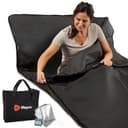 LifePro RejuvaWrap Infrared Sauna Blanket The most completely documented listing in the category: temperature range, heat settings, timer, blanket size and warm-up time are all published. Nothing else here states four of those, let alone five. | Lie flat, heat on the lumbar spine | $399.99 · View on Amazon Price as of October 17, 2026. #ad How we’re funded |
| 2 | 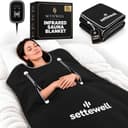 SetteWell XL Infrared Sauna Blanket The longest blanket here, and it publishes both the length and the height it fits. It also sells itself without a calorie claim, which in this category is close to remarkable. | Cheapest way to lie down in heat | $114.99 · View on Amazon Price as of October 17, 2026. #ad How we’re funded |
| 3 | 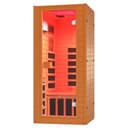 RESTISLAND Full Spectrum Infrared Sauna, 1 Person, 1178W The most completely specified cabin here: 1,178W at 120V, full-spectrum with named 660/850nm red-light wavelengths, and actual published dimensions. Everything you need to plan the corner it goes in. | Best cabin if you want to sit upright | $1,459.99 · View on Amazon Price as of October 17, 2026. #ad How we’re funded |
Why two of those three picks are blankets
Because for lower back pain, lying flat is the whole argument. A blanket puts you horizontal and fully supported, with the heating element in direct contact with your lumbar region rather than radiating at it from four feet away across a cabin. If sitting upright without support is what aggravates your back, that difference is larger than any difference between heat sources.
The first pick is the blanket in our registry that publishes the most: nine heat settings, a stated 95–176°F range, a 60-minute timer ceiling and its flat dimensions. The second is the cheapest route to the same posture and, as it happens, the longest blanket we compare — useful if you are tall, which the fit comparison goes into properly.
The cabin is there for the reader who wants real sauna heat and a door, and it is the one-person full-spectrum unit that publishes its exterior dimensions and a 1,178W draw — low enough to compute inside a standard circuit. Bring a rolled towel for your lumbar curve, or sit on the floor of it with your back against the panel if the bench does not suit you. Honest caveat: no cabin listing we have read publishes anything about back support, so that is an ergonomics decision you make after delivery, not before.
When to stop reading this and call a doctor
Some back symptoms are not recovery questions. See a doctor rather than buying a sauna if you have:
- numbness or tingling, anywhere;
- pain radiating down a leg, or weakness in a leg or foot;
- any change in bladder or bowel control;
- back pain that followed a fall, a collision or any impact;
- fever alongside back pain.
Separately, heat exposure is a cardiovascular load independent of your back. If you have a cardiovascular condition, unstable or low blood pressure, are pregnant, or take medication affecting sweating, blood pressure or fluid balance, that is a conversation to have first. See sauna and blood pressure and sauna while pregnant.
Frequently asked questions
Will a sauna help with back pain?
For the stiff, tense, long-standing kind of back discomfort, heat is the half of the hot-and-cold pair that most people find more comfortable - which is the same broad guidance anyone gets about a heating pad versus an ice pack. A sauna is a whole-body version of that: it warms superficial tissue, most people feel looser afterwards, and the twenty quiet minutes are not nothing either. What it is not is a treatment for a spinal problem, and the heat does not reach a disc. This page is not medical advice; back pain with any neurological symptom needs a doctor rather than a sauna.
Is heat or cold better for a bad back?
The conventional rule of thumb is cold for an acute flare in the first day or two and heat for ongoing stiffness. Since most persistent back discomfort is stiffness and muscular tension rather than acute inflammation, heat is what the majority of people with long-standing back pain end up preferring. If yours flares and settles, you may want both at different times - which is the case contrast therapy exists for, and our protocol page covers the sequencing.
How long should I stay in a sauna with a bad back?
Shorter than the bench will let you, and the limit is usually posture rather than heat. Ten to fifteen minutes is plenty, and the reason to cap it is that sitting unsupported on a hard wooden bench with your weight on your tailbone and your lower back unsupported is itself a back-loading position. If you find yourself slumping or shifting constantly, your session has already gone on too long. Come out, move, and go back in if you want - two short rounds beat one long one for a sore back.
Is a sauna blanket better than a cabin for back pain?
For a lot of people with lower back pain, yes - and the reason has nothing to do with heat quality. In a blanket you are lying down, flat and fully supported, with the heating element directly against your lumbar region. In a cabin you are sitting on a hard bench with no backrest unless you build one in. If the thing that aggravates your back is sitting upright without support, the form factor matters more than the heat source does. The trade-off is the experience: your head stays at room temperature in a blanket, which some people find unsatisfying.
Should I stretch in the sauna?
Gentle movement is fine and many people like it; aggressive stretching is a bad idea and a sauna is a particularly tempting place to do it. Warm tissue feels more extensible, which makes it easy to take a joint further than you normally would - and the feedback that would normally stop you is dulled by the heat and the relaxation. Keep anything you do in there within a range you could reach cold, and do your real mobility work afterwards, in a normal room, where you can feel what you are doing.
When should I not use a sauna for back pain?
See a doctor rather than a sauna if you have numbness or tingling, pain radiating down a leg, weakness in a leg or foot, any change in bladder or bowel control, back pain following a fall or impact, or fever with back pain. Separately, heat exposure is a cardiovascular load in its own right: if you have a cardiovascular condition, low or unstable blood pressure, or are pregnant, discuss sauna use with a doctor before starting. And if you are on medication that affects sweating, blood pressure or fluid balance, that is worth asking about too.
Related
- Cold plunge for back pain - the cold side of the same question
- Sauna for joint pain - the same reasoning for a specific joint
- Sauna for muscle recovery - what heat does after training
- Sauna and inflammation - what the evidence supports
- Sauna benches - heights, depths and the support problem
- Sauna temperature and duration - the dose numbers
- Best sauna blankets - the lie-down option, compared
- Best sauna blankets for tall people - because fit decides whether you can lie flat
- Best 1-person saunas - if you want a cabin and a door
- Sauna before or after cold plunge - sequencing, and why cold last is stiffer
- Sauna and blood pressure - the cardiovascular side
- How to use a sauna - the basics, properly
Sources
- Ice & Cedar sauna inflammation and safety guides — This page describes heat-versus-cold guidance for back discomfort in general, widely recognized qualitative terms, comparable to standard heating-pad-and-ice-pack advice; no specific study, percentage, author or institution is asserted as a finding. The statement that sauna heat warms superficial tissue rather than deep spinal structures is a statement about tissue depth, not a clinical result. Neurological symptoms, diagnosed spinal conditions and red flags are deferred to a doctor, and this page is not medical advice. (accessed 2026-10-17)
- Manufacturer listings for the three picks (Amazon detail pages) — The heat settings, temperature ranges, timer ceilings, flat dimensions and rated power referenced above were read from the manufacturers' own listings and are linked per product on our blanket and sauna pages. No cabin listing we have read publishes a backrest angle, bench depth or any back-support claim, which is why none is ranked on one. (accessed 2026-10-17)