What size chest freezer for a cold plunge?
Five to seven cubic feet for one adult - and the number that actually decides it is interior depth, not capacity. Here is the arithmetic, and the three things the freezer still cannot do.
Last verified · Ice & Cedar editorial
The verdict
For one adult, buy 5 to 7 cubic feet, and go to 7 if you are over about six feet tall. A cubic foot is 7.5 gallons, so a 7 cu ft cabinet encloses roughly 52 gallons and gives you around 37 gallons of actual water once you fill to shoulder depth with a body in it. Do not buy bigger than you need — every extra gallon is water you chill once and keep cold forever. And measure the interior depth before you look at a single capacity rating: a cabinet you cannot sit down in is the wrong cabinet at any size.
The chest freezer conversion is the cheapest route to genuinely cold water, and sizing is where people get it wrong in both directions — buying a cabinet too shallow to sit in, or buying one so large that the running cost undoes the saving. Our main chest freezer guide covers the conversion itself: the sealing, the controller, the electrical side and the honest risks. This page answers only the sizing question, and it answers it with arithmetic rather than a recommendation.
Start with the unit conversion, because every gallon figure below comes from it and it is exact rather than estimated. A US gallon is 231 cubic inches and a cubic foot is 1,728 cubic inches, so one cubic foot holds 7.4805 gallons. That is the whole basis of the table below. Nothing in it is a manufacturer claim, because no freezer manufacturer publishes anything about holding water — which is the first thing worth knowing about this build.
What each rated size actually holds
Interior volume is the conversion applied to the freezer’s own rated capacity. Usable water is that volume at 70%, which is our stated assumption for filling to shoulder depth with a body displacing water — not a published figure. If you fill shallower, scale it down; the point of stating the assumption is that you can change it.
| Rated capacity | Interior volume | Usable water | Who it suits |
|---|---|---|---|
| 3.5 cu ft | 26 gal | ~18 gal | Too small for most adults to sit in |
| 5 cu ft | 37 gal | ~26 gal | One adult up to average height |
| 7 cu ft | 52 gal | ~37 gal | One adult, including tall - the usual sweet spot |
| 10 cu ft | 75 gal | ~52 gal | Roomy for one; costs more to hold cold |
| 15 cu ft | 112 gal | ~79 gal | More water than a home setup needs |
Interior volume is the exact unit conversion from the rated capacity. Usable water applies our stated 70% fill assumption. Neither figure is published by any freezer maker.
What to look for, in priority order
1. Interior depth, before anything else. This is the spec that decides whether the build works, and it is the one capacity ratings hide completely. You need enough depth that the water comes up over your shoulders when you are sitting or kneeling in it, because a plunge that leaves your upper back in the air is a leg bath. Two cabinets with identical cubic foot ratings can differ by several inches of depth. Measure it, or get it in writing.
2. Interior length, second.Depth decides how much of you is submerged; length decides whether you can sit at all. Work out how you intend to sit — legs folded, knees up, cross-legged — and check that against the floor of the cabinet rather than its volume. This is the measurement most people take after delivery, which is the expensive order to take it in.
3. Then the volume, and smaller than you think.Once depth and length work, less water is strictly better. Every gallon has to be chilled down once and then held against heat leaking in, forever, and that is your monthly cost rather than a one-off. A chest freezer already has thicker insulated walls than almost any purpose-built tub, which is precisely why this conversion is cheap to run — do not throw that advantage away by buying a cabinet twice the size you need. The same logic drives our best-value tub rankings.
4. Then whether it is a chest or an upright. It has to be a chest freezer, not an upright. A chest cabinet opens upward and holds water in a basin; an upright has a door on the front and will empty itself across your floor. This sounds obvious written down and is a genuinely common mistake when people shop by price and cubic feet on a listing page.
5. Then accept what you are doing.A chest freezer is a food appliance, and holding standing water in one is outside every manufacturer’s intended use, warranty and electrical assumptions. That is why we do not compare freezer models or point you at one — recommending a specific unit would imply an approval that does not exist. Read our conversion guide and the GFCI guide before you start, and treat the electrical side as the part not to improvise on.
6. Finally, size the water care to the usable gallons. This is where the arithmetic above earns its keep. A freezer build keeps its water for weeks rather than draining daily, so dosing, filtration and testing all scale off the real water volume — roughly 37 gallons in a 7 cu ft cabinet, not the 52 gallons the box claims. Dose to the wrong number and you are either wasting treatment or under-treating water you are sitting in.
The three things the freezer cannot do for you
Ranked on published specifications. Select a row to jump to the full write-up. We have not tested these units — here is exactly what we do instead.
| # | Product | Best for | Price |
|---|---|---|---|
| 1 | 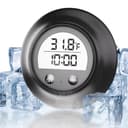 Generic Silicone Cover Ice Bath Thermometer with Timer A thermometer with a timer is the one accessory that changes behavior: it stops you guessing both the temperature and the duration. | Buy this first | |
| 2 | 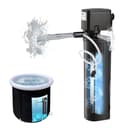 COOSPIDER 600 GPH Submersible Pool Filter with UV Light The best-documented product on this page by a distance, and the one whose published wattage actually matters — 44 W running continuously, against the 4.5 W of the only other product here that states a figure. | The circulation a freezer has none of | $64.99 · View on Amazon Price as of October 4, 2026. #ad How we’re funded |
| 3 | 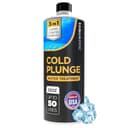 MAV AquaDoc Cold Plunge Water Treatment (32 oz) The clearest weekly dose in the category — one ounce per hundred gallons — which is the only reason a cost per week can be worked out at all. What is in the ounce is not published. | For water you keep for weeks | $23.99 · View on Amazon Price as of October 4, 2026. #ad How we’re funded |
| 4 |  Caplide 4-in-1 Cold Plunge Test Strips (30 count) The cheapest item on this page and the only one that tells you whether anything else on it is working. Four readings off one strip, including the peroxide number nothing else measures. | To check it is where you think it is | $19.99 · View on Amazon Price as of October 4, 2026. #ad How we’re funded |
Is a freezer build still the cheap option at the right size?
Yes, and sizing it correctly is most of why. The freezer conversion wins on two things: the compressor is already in the cabinet, so you are not buying a separate chiller, and the walls are genuinely insulated, so it holds temperature well. Both advantages shrink as the cabinet grows — a bigger box means more water for the same compressor and more surface area to lose cold through. A 5 to 7 cu ft build is the version of this project that is cheaper to own than a tub-and-chiller setup. A 15 cu ft one mostly is not.
The honest comparison point is a small insulated tub with a plug-in chiller, which costs more up front, comes with a warranty, is designed for water and can be moved without two people and a dolly. If the build itself is the appeal, size it at 5 to 7 cubic feet and it is a genuinely good project. If you want cold water with no project attached, our tub roundup and 110V chiller roundup are the alternative, and neither of them voids anything.
Frequently asked questions
What size chest freezer do I need for a cold plunge?
For one adult, 5 to 7 cubic feet is the range that works, and 7 is the safer buy if you are over about six feet tall. The arithmetic: a cubic foot holds 7.5 gallons, so a 5 cu ft freezer encloses about 37 gallons of interior volume and a 7 cu ft one about 52. You will not fill either to the brim - you fill to roughly shoulder depth with your body displacing water - so plan on using around 70% of that. The number that actually decides it is not the volume at all, though: it is the interior depth and length, because a freezer you cannot sit down in is the wrong freezer at any capacity.
Is a bigger chest freezer better for a cold plunge?
No, and this is the mistake that costs the most over time. Every extra gallon is water you have to chill down once and then keep cold forever, so a 15 cu ft freezer is not a more generous plunge - it is a bigger electricity bill and a longer wait every time the water warms up. A chest freezer already has the advantage of thick insulated walls, which is the whole reason this conversion works, and a smaller cabinet holds temperature more cheaply than a large one. Buy the smallest cabinet you can comfortably get your shoulders under, exactly as you would with a purpose-built tub.
How many gallons is a 7 cubic foot freezer?
About 52 gallons of enclosed volume - that is simply the unit conversion, since a cubic foot is 7.48 US gallons. The usable figure is lower. You are not filling a sealed box; you are filling to a level you can sit in without overflowing when your body goes in, which in practice means somewhere around 70% of the interior, or roughly 37 gallons of actual water. That is the number to size any chiller or water treatment against, not the number on the freezer's box.
Should I measure the inside or go by cubic feet?
Measure the inside. Cubic feet is a volume rating that tells you nothing about shape, and shape is what decides whether you fit. The two dimensions that matter are interior length - can you sit with your legs extended or at least folded comfortably - and interior depth, which sets how much of your torso goes under water. A short, wide cabinet and a long, shallow one can carry the identical cubic foot rating and be completely different plunges. Take a tape measure to the floor model, or get the interior dimensions in writing from the seller, before you commit.
Do you recommend a specific chest freezer?
No, and deliberately so: we do not compare freezers, because a freezer is a food appliance and using one as a water vessel is outside every manufacturer's intended use. We will not point you at a specific model and imply it is approved for a job its maker never designed it for. What we will do is give you the sizing arithmetic, tell you which interior dimensions to measure, and compare the parts of the build we do know - the thermometer, the circulation and the water chemistry - which are the three things the freezer itself cannot handle.
What does a chest freezer conversion still need?
Three things the cabinet does not provide. A water thermometer, because a freezer's own thermostat reads air temperature in a food compartment and has no idea what your water is doing. Circulation, because still water stratifies into a cold layer at the bottom and a warmer one at the top, and a freezer has no pump at all. And water treatment, because unlike a bathtub plunge you are keeping this water for weeks rather than draining it daily. Those three, plus the electrical and sealing considerations our main chest freezer guide covers, are the whole conversion.
Related
- Chest freezer cold plunge - the conversion itself, risks included
- DIY cold plunge - every build route compared
- What size cold plunge tub do I need - the same question for a bought tub
- Cheapest way to cold plunge - where a freezer build actually ranks
- Cold plunge maintenance - water you keep for weeks needs a routine
- Best cold plunge water treatment - dosing to your real gallons
- Do you need a GFCI for a cold plunge - the part not to improvise
- Best cold plunge for the money - the bought-tub alternative
Sources
- Volume conversion: 1 US liquid gallon = 231 cubic inches (by definition) — Every gallon figure on this page is this exact conversion applied to a freezer's own rated capacity: 1,728 cubic inches per cubic foot divided by 231 cubic inches per gallon gives 7.4805 gallons per cubic foot. The usable-water column additionally applies our own stated 70% fill assumption, which is labeled as an assumption everywhere it appears. (accessed 2026-10-05)
- Manufacturer listings for the conversion parts above (Amazon detail pages) — Specifications for the thermometer, filter pump, treatment and test strips were read from each product's own listing on the date shown on its card in our roundups, where each listing is linked. No chest freezer is compared or recommended on this page, because using a food appliance as a water vessel is outside every freezer maker's intended use. (accessed 2026-10-05)