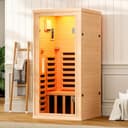
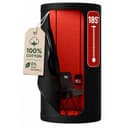
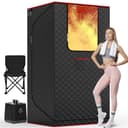
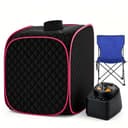
Start with the form factor, because it decides everything else.A permanent infrared cabin needs a corner it can keep — roughly two-and-a-half to three feet square of floor you give up for good — and rewards you with the most sauna-like daily experience of the three. A fold-away steam tent asks for nothing but a cupboard between sessions, which is why it wins for renters and small apartments, and the trade is that the heat is milder. A dry hot-air pod sits between them: packable like a tent, but genuinely hot like a cabin. Decide which of those three lives in your space before you compare any two products, because a cabin and a tent are not really competing.
Then read the heat honestly.Infrared is a dry radiant warmth at a low air temperature — you feel it on your skin rather than in the room. A steam tent is humid heat that tops out around 115–140°F on the units here, well below a real sauna, and it fogs rather than bakes. Only the dry hot-air pod reaches a true dry-sauna temperature (185°F). None of these is a traditional 240V steam room, and several steam tents are sold as “infrared” while shipping a boiler — a labeling error the spec tables above correct by classifying every unit by how it actually heats. Buy the heat you want, not the word on the box.
Then plan around the assembled size and standing height, not the seat count.“One person” is the easy part; the number that bites is whether you can stand up. The taller steam tents here let you stand, while the cheapest is only about 40 inches tall, so you sit with your head poking out of the top. The cabins are fixed boxes — check the exterior footprint against the corner you have in mind, and note how few listings in this category publish it at all. The Real Relax is the only cabin here that states its dimensions, which is a point in its favor, not a coincidence.
Then weigh what each maker will actually tell you.The pattern that runs through this whole category runs through the one-person end of it too: listings are generous about wood and “full spectrum” and evasive about the numbers that decide the buy. Two of the three cabins publish both their wattage and their voltage so you can confirm the outlet; one publishes the wattage and hides the voltage. The best steam tents publish their assembled dimensions, temperature and timer; the cheapest hide most of it. Where a listing is silent, the spec table says “Not published” rather than guessing — because that silence is information you should have before you pay.
Finally, let price follow the form factor, not the other way around.The fold-away steam tents cost about what a decent space heater does; the dry hot-air pod sits in the middle; the permanent full-spectrum cabins run into four figures. That spread is real, but it is mostly a spread in permanence and heat type, not in how good the “sauna” is — so decide the form factor first and let it set your budget, rather than letting a low sticker talk you into a tent when what you wanted was a cabin.