Do you need a filter on a cold plunge?
If you drain after every session, no. If you keep the water, yes - but read your chiller's own specs first, because most of them already claim filtration you may already own.
Last verified · Ice & Cedar editorial
The verdict
Drain after every session and you need no filter at all. Keep the water — which is how every dedicated tub and every chest freezer build works — and you want something moving and cleaning it. Before you buy anything, check your chiller: 7 of the 8 chillers we compare state filtration of their own, so for many setups this is not a separate purchase. If you have no circulation at all, the standalone pick is the 600 GPH submersible filter with a UV stage. And a filter is not a substitute for water treatment: one removes particles, the other handles what particles are not.
“Cold plunge filter” is one of the most-searched pieces of plunge hardware and one of the most often bought unnecessarily, because the answer depends on a question nobody asks first: do you keep the water, or do you dump it? Everything else follows from that.
If you plunge in a bathtub and pull the plug afterwards, you have solved water quality the most thorough way available and a filter is pointless. That is a real and underrated route — our bathtub chiller page exists for exactly those setups, and the trade is that you refill and re-chill every time.
If you keep the water, you have inherited a small body of standing water that a person gets into several times a week. 1 of the 5 tubs we compare publish a filtration spec of their own; most publish a water-change interval instead, typically measured in weeks. In between those changes, something has to deal with what you bring into the water. That something is two different things, and conflating them is the usual mistake.
What a filter does, and what it absolutely does not
A mechanical filter removes particulates. Hair, skin, dander, grit, sunscreen residue, the leaf that blew in off the deck. It is doing a physical job: water passes through a medium and solids stay behind. This is genuinely worth doing, because particulate load is what makes water look and feel unpleasant and what gives everything else in the water something to feed on.
It does not sanitise the water.A filter has no effect on the microbiological side, which is the job of chemistry — the oxidisers, all-in-one treatments and ozone covered on our water treatment roundup. A tub running a filter and nothing else has clear water that has not been treated, and clear is not the same as clean. If you keep water for more than a few days, run both and verify with test strips rather than trusting either one.
And it does nothing for water it never touches.This is the constraint people miss. A filter only treats what flows through it, so without circulation you have a filter sitting in a corner of a still tub doing almost nothing. That is why the useful products in this category are filter-and-pump combinations rather than bare cartridges, and why a chest freezer build — which has no pump at all — is the setup that benefits most from one.
What to check before you buy one
1. Read your chiller’s own spec sheet. This is the step that saves most readers the purchase. 7 of 8chillers we compare state filtration, and one is sold explicitly as a complete kit with filter and pump. What almost none of them publish is what kind of filtration or how fine — “includes filtration” can mean a basic screen or a genuine cartridge. Start with what you own, and add to it only if the water tells you to.
2. Work out whether you have circulation.If your chiller is plumbed into the tub, water is already moving whenever it runs, and a filter in that loop is working. If you have no chiller at all — an ice-bath setup, or a freezer build — you have no circulation, and a submersible filter-and-pump unit is solving two problems for one price.
3. Match the flow rate to your gallons, roughly.Nobody in this category publishes turnover guidance, so this is judgement rather than arithmetic: a 600 GPH unit moves a lot of water relative to a 50–150 gallon plunge, which is the right direction to err in. There is no benefit to under-sizing the pump to save a few dollars, because the whole value of the filter depends on water reaching it.
4. Decide between a cartridge and ozone.A cartridge filter is a consumable you rinse and eventually replace. An ozone generator injects an oxidiser into the flow and leaves no stored chemistry in the water, which some owners much prefer — the unit we compare publishes a 100 mg/h output, and it is treating rather than filtering, so it does not remove hair or grit. If particulates are your complaint, you want a filter. If chemistry in the water is your complaint, you want ozone. Several setups run both.
5. Insulate the housing if you plumb one inline. A small, specific point that matters more than it sounds: an inline filter housing in a chilled loop is a bare plastic radiator sitting in room- temperature air, warming your water on every pass and dripping condensation underneath itself. A neoprene sleeve for the housing is a twenty-dollar fix for both. It is the least-searched item in the whole gear category and one of the more sensible ones.
6. Then check the water rather than the schedule. No manufacturer publishes a cartridge-replacement interval for cold plunge use, and cold water behaves differently from pool water, so a calendar is guesswork. Rinse when flow visibly drops, replace when rinsing stops helping, and test the chemistry independently. Our maintenance guide puts that into a routine alongside the water-change interval your own tub publishes.
Filtration, four ways
Ranked on published specifications. Select a row to jump to the full write-up. We have not tested these units — here is exactly what we do instead.
| # | Product | Best for | Price |
|---|---|---|---|
| 1 | 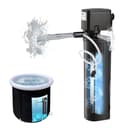 COOSPIDER 600 GPH Submersible Pool Filter with UV Light The best-documented product on this page by a distance, and the one whose published wattage actually matters — 44 W running continuously, against the 4.5 W of the only other product here that states a figure. | Best standalone filter | $64.99 · View on Amazon Price as of October 4, 2026. #ad How we’re funded |
| 2 | 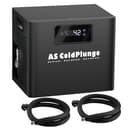 AS ColdPlunge 1/3 HP Ice Bath Water Chiller (110V) The best-equipped 1/3 HP plug-in here: a built-in filter, a submersible pump and insulated hoses out of the box. The compressor is still small, so the completeness is the reason to pick it, not the speed. | Chiller with filter and pump included | $399.00 · View on Amazon Price as of October 4, 2026. #ad How we’re funded |
| 3 | 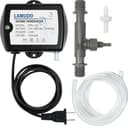 Lamudo SPA-124 Ozone Generator with Venturi Injector The chemical-free route, with the venturi in the box rather than sold separately — and one of only two products here that publishes its own power draw. It still asks for plumbing a hose-filled tub does not have. | If you want no cartridge at all | $72.99 · View on Amazon Price as of October 4, 2026. #ad How we’re funded |
| 4 | 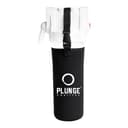 Plunge Crafters ChillGuard Filter Housing Sleeve The cover nobody searches for. If you run a chiller through an inline filter, that housing is a bare plastic radiator in your loop, and this is a twenty-dollar jacket for it. | If you already run an inline housing | $19.98 · View on Amazon Price as of October 4, 2026. #ad How we’re funded |
Picks are listed in the order most readers should consider them: check the chiller you own, then add circulation and filtration if you have none, then decide whether you want chemistry in the water at all.
Frequently asked questions
Do you need a filter on a cold plunge?
It depends entirely on whether you keep the water. If you plunge in a bathtub and drain it afterwards, you need no filtration at all - fresh water every session solves the problem that a filter exists to solve. If you keep the water for days or weeks, which is how almost every dedicated tub and every chest freezer build works, then yes, you want something moving and cleaning that water. But check your chiller first: 7 of the 8 chillers we compare claim filtration of their own, so for many setups this is not a separate purchase at all.
Does a filter replace water treatment?
No, and this is the single most useful thing to understand before you buy either one. A mechanical filter removes PARTICULATES - hair, skin, dander, grit, the leaf that blew in. Water treatment chemistry handles what a filter physically cannot catch, which is the microbiological side. They are not alternatives; they are two jobs, and a setup running only a filter has clear water that has not been sanitised. Run both if you keep water for more than a few days, and use test strips rather than assuming either one is working.
Does my chiller already have a filter?
Quite possibly - and the only way to know is to read your own listing rather than assume. Of the 8 chillers we compare, 7 state filtration in their specifications, and one is explicitly sold as a complete kit with a filter and pump included. What almost none of them publish is what KIND of filtration or how fine it is, so "includes filtration" can mean a basic screen or a real cartridge. If yours includes something, start there and add a standalone filter only if the water tells you it is not enough.
What does a UV clarifier do in a cold plunge?
A UV stage sits in the water flow and treats what passes through it, which makes it a useful companion to a mechanical filter rather than a replacement for either filtration or chemistry. The standalone unit we compare combines both in one submersible body - a 600 GPH filter with a UV light - which is why it is the pick for a tub with no built-in circulation. The honest caveat applies to every UV product in this category: it only acts on water that actually flows past it, so it is doing nothing for the water sitting still in the corners of your tub. Circulation is the prerequisite.
Do I need a filter for a chest freezer cold plunge?
This is the build where the answer is most clearly yes. A chest freezer conversion keeps the same water for weeks, has no pump of any kind, and no circulation at all - water in a still, cold box stratifies and stays still. A submersible filter and pump addresses both problems at once, which is why it appears as the first recommendation on our freezer sizing guide too. If you are running a freezer build with no circulation and no chemistry, you are keeping standing water, and that is worth fixing before you spend anything on insulation or accessories.
How often do you change a cold plunge filter cartridge?
More often than the listings suggest and less often than a pool, and nobody in this category publishes a figure - so treat it as observational rather than scheduled. Cold water holds up better than warm water, which works in your favour, but a plunge gets a far higher bather load per gallon than a pool does, which works against you. The practical approach is to rinse the cartridge when flow visibly drops and replace it when rinsing stops restoring it. Our maintenance guide covers the rest of the routine, including how that interacts with the water-change interval your tub publishes.
Related
- Best cold plunge water treatment - the chemistry half of the job
- Cold plunge maintenance - the routine that keeps water usable
- What size chest freezer for a cold plunge - the build with no circulation
- Best cold plunge chillers - which ones state filtration of their own
- Best cold plunge chiller for the money - including the all-in-one kits
- Best cold plunge chiller for a bathtub - the setup that needs no filter
- Best cold plunge covers - keeping debris out beats filtering it out
- How to drain a cold plunge - when the water is past saving
Sources
- Manufacturer listings for all four filtration products (Amazon detail pages) — Flow rate, UV stage, ozone output and housing fit above were read from each product's own listing on the date shown on its card in our roundups, where each listing is linked. The counts of chillers and tubs stating filtration are taken from those products' own published specifications - 7 of 8 chillers and 1 of 5 tubs. No cartridge-replacement interval or turnover rate is published by any manufacturer in this set, and none is invented here. (accessed 2026-10-05)