ICE & CEDAR

The best cold plunge covers, ranked on what they are actually made of

Of the eleven covers compared here, not one publishes an R-value. So this ranking is built on the construction each listing does name - and on what each cover has to save you to pay for itself.

Last verified · Ice & Cedar editorial

We have argued for a while that a cover is the highest-leverage thing you can buy after the tub, because a chiller’s entire running cost is compressor hours and a cover is the one lever on heat gain you can still pull after the tub arrives. What we would not do until now is rank them, because the product data did not exist. It does now, and the first thing it shows is why this category is so hard to shop.

Here is the finding, counted from the eleven covers below rather than asserted. Of the eleven covers compared here, nine name an insulating layer, three publish a thickness for it, and none publish an R-value — no thermal resistance, no hold time, no degrees per hour, no percentage energy saving, anywhere in the category. Meanwhile one of them calls itself an insulated cover in copy while its own construction bullet describes one layer of waterproof Oxford fabric and nothing else. Prices here run from under fifteen dollars to over three hundred, and that twenty-fold spread is not explained by any published number.

So this page ranks on five criteria, in this order: whether the cover fits your tub at all; whether the listing names an insulating layer; whether it publishes a thickness for it; whether the attachment can actually hold the cover down and seal it; and only then price. Fit leads deliberately — it is a gate rather than a tiebreaker, because a cover cut for a different tank insulates nothing at any price, and it is the most common way people waste money here.

The four products this category sells under one word are not comparable on the same axes, so we label each of them: a lid that sits on the rim, a lid that floats on the water, a sleeve that wraps the walls, and a plain debris cover with no insulating layer at all. Ranking those as a single list without saying so is exactly how a shopper ends up with a fifteen-dollar dust sheet expecting it to cut their power bill.

We have not tested any of these covers; we own none of them. Here is exactly what we do instead. Every specification below was read from the seller’s own Amazon listing on the date printed on each card, every cover was in stock and carried a live price when it was read, and prices on this page are live rather than typed into the text.

Quick picks

Ranked on published specifications. Select a row to jump to the full write-up. We have not tested these units — here is exactly what we do instead.

#ProductBest forPrice
1
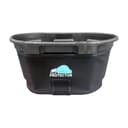
Polar Protector 100-Gallon Hard Insulated Cover

Polar Protector 100-Gallon Hard Insulated Cover

The only cover here that names a rigid foam core and a six-point tie-down in the same listing. Foam plus a mechanical grip is the combination that survives wind, and wind is what lifts the cheap ones off.

Best overall
$189.99 · View on Amazon

Price as of August 15, 2026. #ad How we’re funded

2
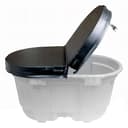
Polar Protector 2x2x4 Magnetic Insulated Hard Cover

Polar Protector 2x2x4 Magnetic Insulated Hard Cover

The only cover on this page that publishes a foam thickness and the only one with a hinge. A 2.5 inch EPS core you can flip open one-handed is a cover you will actually keep using.

Thickest published insulation
$199.99 · View on Amazon

Price as of August 15, 2026. #ad How we’re funded

3
The Pod Company Insulated Ice Pod Lid

The Pod Company Insulated Ice Pod Lid

The only cover here that floats on the water instead of sitting over it, which removes the air gap every rim-mounted lid leaves behind. It also publishes its thickness, which almost nothing in this category does.

Best cheap real insulation
$27.00 · View on Amazon

Price as of August 15, 2026. #ad How we’re funded

4
Polar Protector 100-Gallon 5 mm Neoprene Slip Sleeve

Polar Protector 100-Gallon 5 mm Neoprene Slip Sleeve

Not a lid. This wraps the outside of the tank, which is the surface nobody covers and the one your chiller fights all afternoon in the sun.

Best for the walls
$69.99 · View on Amazon

Price as of August 15, 2026. #ad How we’re funded

5
Plunge Crafters Insulated Stock Tank Lid, 100 Gallon

Plunge Crafters Insulated Stock Tank Lid, 100 Gallon

The only covers on this page that make a child-access claim, and the only ones that fasten with lockable clips rather than a cord you can pull off. That is a safety argument, not a thermal one.

Best with children at home
$299.95 · View on Amazon

Price as of August 15, 2026. #ad How we’re funded

6
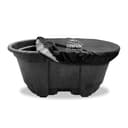
COSFUN 100-Gallon Foil-Insulated Stock Tank Cover

COSFUN 100-Gallon Foil-Insulated Stock Tank Cover

The cheapest cover here that will actually tell you what its insulating layer is: one layer of 600D Oxford over one layer of foil. Modest, but stated — which puts it ahead of covers costing the same that state nothing.

Best budget stock-tank lid
$36.99 · View on Amazon

$39.998% off

Price as of August 15, 2026. #ad How we’re funded

7
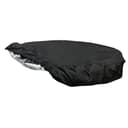
SUNICO Insulated Ice Bath Cover, 32.5 in Round

SUNICO Insulated Ice Bath Cover, 32.5 in Round

Built for the round inflatable tub most people actually own, and the only cover here that names three layers: insulation cotton, aluminium foil and a silver reflective outer.

Best for a round inflatable
$19.99 · View on Amazon

Price as of August 15, 2026. #ad How we’re funded

8
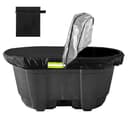
MQLD 100-Gallon Stock Tank Cover with Zipper

MQLD 100-Gallon Stock Tank Cover with Zipper

The best-engineered fabric cover here for wind — bungee hem, sandbag loops, a zip panel so you can dose or test without stripping it off. Read its insulation claim carefully, though: the word appears, the layer does not.

Best in wind
$21.99 · View on Amazon

Price as of August 15, 2026. #ad How we’re funded

9
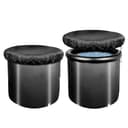
NEAMVCT Ice Tub Cover, 32 in

NEAMVCT Ice Tub Cover, 32 in

The most honest listing on this page: it claims to keep the tub clean and it does not claim to insulate. If debris is your actual problem, this is the whole solution for the price of two coffees.

Cheapest honest debris cover
$14.99 · View on Amazon

Price as of August 15, 2026. #ad How we’re funded

10
Plunge Crafters Insulated Stock Tank Lid, 150 Gallon

Plunge Crafters Insulated Stock Tank Lid, 150 Gallon

The same lid, cut for the bigger tank. Listed separately because fit is the whole game in this category and a 100-gallon lid on a 150-gallon tank insulates nothing.

Best for a 150-gallon tank
$339.95 · View on Amazon

Price as of August 15, 2026. #ad How we’re funded

11
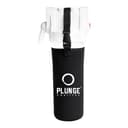
Plunge Crafters ChillGuard Filter Housing Sleeve

Plunge Crafters ChillGuard Filter Housing Sleeve

The cover nobody searches for. If you run a chiller through an inline filter, that housing is a bare plastic radiator in your loop, and this is a twenty-dollar jacket for it.

Best for a chiller loop
$19.98 · View on Amazon

Price as of August 15, 2026. #ad How we’re funded

#1Best overall

Polar Protector 100-Gallon Hard Insulated Cover

The only cover here that names a rigid foam core and a six-point tie-down in the same listing. Foam plus a mechanical grip is the combination that survives wind, and wind is what lifts the cheap ones off.

Strengths

  • Names its insulation outright — an expanded polystyrene (EPS) foam core, not a vague thermal lining
  • Six-point hook-and-buckle attachment, so it stays down in wind rather than relying on a hem cord
  • Publishes its own dimensions (32 in wide, 52.5 in long) so you can check fit before buying
  • Adds a skirt, which the fabric lids here do not

Trade-offs

  • No R-value, no temperature-hold figure, no energy saving — same blank as every cover on this page
  • Foam thickness is not published on this listing, unlike the brand's own magnetic sibling
  • Fits one tank shape; the listing itself tells you to measure first
  • Costs roughly ten times the fabric covers here for an unquantified thermal gain
What it isInsulated lid (sits on the rim)
Fits100-gallon oval poly stock tanks
Insulating layer namedExpanded polystyrene (EPS) foam core
Thickness (as published)Not published
R-valueNot published
Shell materialNot published
How it attachesSix-point hooks with tightening buckles, plus a skirt
Cover size52.5" x 32" x 2.5"
WeightNot published
Child-access claimNot published
WarrantyNot published

Specifications as published by the manufacturer listing, read on August 15, 2026. Blank fields are specs the manufacturer does not publish.

#2Thickest published insulation

Polar Protector 2x2x4 Magnetic Insulated Hard Cover

The only cover on this page that publishes a foam thickness and the only one with a hinge. A 2.5 inch EPS core you can flip open one-handed is a cover you will actually keep using.

Strengths

  • Publishes 2.5 in of EPS foam core — the single thickest published insulation figure here
  • Magnets along the underside rim plus magnetic-ended straps, so there is nothing to unclip
  • Hinged lid: you fold half back instead of lifting the whole thing off and finding somewhere to put it
  • 600D rip-proof canvas shell, UV- and water-resistant, is named rather than implied

Trade-offs

  • Magnets need steel — this will not hold on a Rubbermaid or any poly tub, and the listing scopes itself to galvanized tanks for that reason
  • No exterior dimensions published at all, so fit rests entirely on the 2x2x4 ft tank standard
  • No R-value or hold-time figure, same as the rest
  • The hinge is a seam, and a seam is the part of any insulated lid that goes first
What it isInsulated lid (sits on the rim)
FitsStandard 2 x 2 x 4 ft galvanized stock tanks
Insulating layer namedExpanded polystyrene (EPS) foam core
Thickness (as published)2.5 in
R-valueNot published
Shell material600D rip-proof canvas, UV- and water-resistant
How it attachesMagnets on the underside rim plus magnetic-ended straps; hinged lid
Cover sizeNot published
WeightNot published
Child-access claimNot published
WarrantyNot published

Specifications as published by the manufacturer listing, read on August 15, 2026. Blank fields are specs the manufacturer does not publish.

#3Best cheap real insulation

The Pod Company Insulated Ice Pod Lid

The only cover here that floats on the water instead of sitting over it, which removes the air gap every rim-mounted lid leaves behind. It also publishes its thickness, which almost nothing in this category does.

Strengths

  • Sits directly on the water surface — no air gap between cover and water, and no evaporation off it
  • Publishes 4 mm ("0.16 in") of insulation, one of only three thickness figures on this page
  • Inflatable perimeter ring presses to the tub wall, which is the closest thing to a seal in this comparison
  • Under two pounds and deflates flat for storage
  • Made by the same company as one of the tubs we rank, so the fit is the brand's own

Trade-offs

  • No diameter published — the dimensions on the listing are the shipping carton, so match it to your pod model rather than to a measurement
  • Sold for the standard Ice Pod; it is not stated to fit the Ice Pod Pro or any other brand
  • 4 mm is thin against a 2.5 in foam slab, and there is still no R-value to compare them with
  • Floating means it gets wet and stays wet — it lives in the tub, not on a shelf
  • Does nothing about debris landing on the tub above it, or about sun on the walls
What it isFloating lid (sits on the water)
FitsThe Pod Company standard Ice Pod (no diameter published)
Insulating layer namedSub-zero thermal insulation with an inflatable perimeter ring
Thickness (as published)4 mm (0.16 in)
R-valueNot published
Shell materialNot published
How it attachesFloats on the water surface; inflatable ring seals against the tub wall
Cover sizeNot published
Weight1.7 lb
Child-access claimNot published
WarrantyNot published

Specifications as published by the manufacturer listing, read on August 15, 2026. Blank fields are specs the manufacturer does not publish.

#4Best for the walls

Polar Protector 100-Gallon 5 mm Neoprene Slip Sleeve

Not a lid. This wraps the outside of the tank, which is the surface nobody covers and the one your chiller fights all afternoon in the sun.

Strengths

  • Publishes 5 mm of neoprene — a real material at a real thickness, not a lining
  • Insulates the walls, which is where an uninsulated stock tank loses most of its ground
  • Neoprene is waterproof, so it also stops the condensation sweat that pools around a chilled tank
  • Handles, a tightening buckle and a drawstring; publishes its own 39 x 23 x 20 in size

Trade-offs

  • It is not a cover for the top — you still need a lid, so budget for both
  • Fits one tank shape and size; the tank is not included and the listing says so
  • No R-value and no hold-time figure, same blank as the lids
  • Wrapping the tank means unwrapping it to drain or inspect for leaks
What it isWall sleeve (wraps the outside)
Fits100-gallon oval poly stock tanks (tank not included)
Insulating layer namedNeoprene
Thickness (as published)5 mm
R-valueNot published
Shell materialNeoprene
How it attachesSlips over the tank from below; side handles, tightening buckle and drawstring
Cover size39" x 23" x 20"
Weight4 lb
Child-access claimNot published
WarrantyNot published

Specifications as published by the manufacturer listing, read on August 15, 2026. Blank fields are specs the manufacturer does not publish.

#5Best with children at home

Plunge Crafters Insulated Stock Tank Lid, 100 Gallon

The only covers on this page that make a child-access claim, and the only ones that fasten with lockable clips rather than a cord you can pull off. That is a safety argument, not a thermal one.

Strengths

  • Four lockable clips — the only mechanical child/pet-access barrier in this comparison
  • Marine-grade vinyl shell, named, and the right material for permanent outdoor use
  • Publishes full dimensions and weight: 53 x 32.5 in, 4 in thick, 13 lb
  • Cut for a specific tank (Rubbermaid 100-gallon), so fit is not guesswork

Trade-offs

  • The most expensive cover here by a wide margin
  • Insulation is described only as a "thermal-insulated lining" — no material and no thickness
  • Clips need screws on an enclosed build or double-sided tape on a bare tank; neither is a great mount
  • 13 lb is a two-hand lift every session unless you build it into a frame
What it isInsulated lid (sits on the rim)
FitsRubbermaid 100-gallon stock tanks
Insulating layer namedThermal-insulated lining (composition not named)
Thickness (as published)Not published
R-valueNot published
Shell materialHeavy-duty marine-grade vinyl
How it attachesFour locking clips (screws on enclosed builds, double-sided tape on bare tanks)
Cover size53" x 32.5" x 4"
Weight13 lb
Child-access claimFour lockable clips keep the lid secure against pets, children and accidents
WarrantyNot published

Specifications as published by the manufacturer listing, read on August 15, 2026. Blank fields are specs the manufacturer does not publish.

#6Best budget stock-tank lid

COSFUN 100-Gallon Foil-Insulated Stock Tank Cover

The cheapest cover here that will actually tell you what its insulating layer is: one layer of 600D Oxford over one layer of foil. Modest, but stated — which puts it ahead of covers costing the same that state nothing.

Strengths

  • Names its construction layer by layer: 600D waterproof Oxford over a foil insulated layer, double-stitched
  • Publishes exact dimensions (53 x 31 x 4.8 in), so fit is checkable
  • Elastic hem cord and fabric side handles — one-hand on and off
  • A twentieth of the price of the hard lids here

Trade-offs

  • A single foil layer is a radiant barrier, not a thick insulator — expect far less than a foam core, though nobody publishes how much less
  • No thickness figure and no R-value
  • Elastic hem only; nothing mechanical holds it down in real wind
  • Fabric lids sag and pool water in the middle unless you prop the centre
What it isInsulated lid (sits on the rim)
FitsMost 100-gallon oval stock tanks, 53 x 31 in
Insulating layer namedOne layer of 600D waterproof Oxford over one foil insulated layer
Thickness (as published)Not published
R-valueNot published
Shell material600D Oxford, double-stitched
How it attachesElastic shrink cord at the hem, fabric side handles
Cover size53" x 31" x 4.8"
WeightNot published
Child-access claimNot published
WarrantyNot published

Specifications as published by the manufacturer listing, read on August 15, 2026. Blank fields are specs the manufacturer does not publish.

#7Best for a round inflatable

SUNICO Insulated Ice Bath Cover, 32.5 in Round

Built for the round inflatable tub most people actually own, and the only cover here that names three layers: insulation cotton, aluminium foil and a silver reflective outer.

Strengths

  • Names all three layers — insulation cotton, aluminium foil, silver-coated outer fabric
  • Publishes the fit band it is cut for: round tubs 29.5 to 31.5 in in diameter
  • Straps with buckles rather than a bare drawstring
  • The reflective outer targets solar gain specifically, which is the heat route a shaded tub does not have

Trade-offs

  • No thickness for any of the three layers, and no R-value
  • Stock is thin as of the read date ("only 14 left"), so it may not be there when you look
  • The 2 in fit band is narrow — measure your tub's outside diameter, not its capacity
  • No brand-level history in this category; the listing carries no warranty figure
What it isInsulated lid (sits on the rim)
FitsRound tubs 29.5-31.5 in in diameter
Insulating layer namedInsulation cotton with aluminium foil and a silver-coated outer fabric
Thickness (as published)Not published
R-valueNot published
Shell materialSilver-coated UV-reflective fabric
How it attachesStraps with buckles
Cover size32.5" x 32.5" x 9"
Weight1.5 lb
Child-access claimNot published
WarrantyNot published

Specifications as published by the manufacturer listing, read on August 15, 2026. Blank fields are specs the manufacturer does not publish.

#8Best in wind

MQLD 100-Gallon Stock Tank Cover with Zipper

The best-engineered fabric cover here for wind — bungee hem, sandbag loops, a zip panel so you can dose or test without stripping it off. Read its insulation claim carefully, though: the word appears, the layer does not.

Strengths

  • Bungee hem plus hook loops for sandbags — the most serious tie-down on any fabric cover here
  • Zip access panel: reach the water without pulling the whole cover off
  • Reflective strips, so you do not walk into a covered tank in the dark
  • Publishes dimensions (54.5 x 35.6 in) and an anti-UV coating

Trade-offs

  • The listing calls it an "insulated ice cold plunge tub cover" while its own construction bullet describes only heavy-duty waterproof Oxford — no insulating layer is ever named
  • No thickness, no R-value, and in this case no stated insulating layer either
  • A zip is a hole in the cover, and it is the first place a fabric cover fails
  • Needs a board or prop underneath or it sags and holds rainwater
What it isDebris cover (no insulating layer)
Fits100-gallon oval stock tanks, about 54 x 35 in
Insulating layer namedNot published
Thickness (as published)Not published
R-valueNot published
Shell materialHeavy-duty waterproof Oxford, anti-UV coated, double-stitched
How it attachesBungee cord hem, sandbag hook loops, zip access panel
Cover size54.5" x 35.6" x 6"
Weight1 lb
Child-access claimNot published
WarrantyNot published

Specifications as published by the manufacturer listing, read on August 15, 2026. Blank fields are specs the manufacturer does not publish.

#9Cheapest honest debris cover

NEAMVCT Ice Tub Cover, 32 in

The most honest listing on this page: it claims to keep the tub clean and it does not claim to insulate. If debris is your actual problem, this is the whole solution for the price of two coffees.

Strengths

  • Makes no insulation claim at all — the only cover here whose copy matches its construction
  • Coated Oxford with an interior PU waterproof layer, named
  • Publishes exact dimensions, 32 x 32 x 12 in
  • Cheapest item on the page, and under half a pound

Trade-offs

  • No insulating layer — it will not slow your water warming up in any meaningful way
  • Drawstring hem only, so wind can get under it
  • Fits one tub size band; nothing adjustable about the diameter
  • No warranty figure published
What it isDebris cover (no insulating layer)
FitsRound upright tubs about 32 x 32 x 12 in
Insulating layer namedNot published
Thickness (as published)Not published
R-valueNot published
Shell materialHigh-density Oxford with an interior PU waterproof coating
How it attachesDrawstring at the hem
Cover size32" x 32" x 12"
Weight0.4 lb
Child-access claimNot published
WarrantyNot published

Specifications as published by the manufacturer listing, read on August 15, 2026. Blank fields are specs the manufacturer does not publish.

#10Best for a 150-gallon tank

Plunge Crafters Insulated Stock Tank Lid, 150 Gallon

The same lid, cut for the bigger tank. Listed separately because fit is the whole game in this category and a 100-gallon lid on a 150-gallon tank insulates nothing.

Strengths

  • Sized for the 150-gallon tank: 58 x 40 in, 4 in thick
  • Same four locking clips and the same child-access claim as its 100-gallon sibling
  • Marine-grade vinyl, named

Trade-offs

  • The priciest item on this page
  • Same unnamed insulation composition, same absent thickness
  • 16 lb — heavier again, and there is no hinge, so the whole slab comes off each time
  • Listing is explicit that the supplied screws are for enclosed builds only, not a bare tank
What it isInsulated lid (sits on the rim)
FitsRubbermaid 150-gallon stock tanks
Insulating layer namedThermal-insulated lining (composition not named)
Thickness (as published)Not published
R-valueNot published
Shell materialHeavy-duty marine-grade vinyl
How it attachesFour locking clips (screws on enclosed builds, double-sided tape on bare tanks)
Cover size58" x 40" x 4"
Weight16 lb
Child-access claimFour corner clips secure the lid to block access
WarrantyNot published

Specifications as published by the manufacturer listing, read on August 15, 2026. Blank fields are specs the manufacturer does not publish.

#11Best for a chiller loop

Plunge Crafters ChillGuard Filter Housing Sleeve

The cover nobody searches for. If you run a chiller through an inline filter, that housing is a bare plastic radiator in your loop, and this is a twenty-dollar jacket for it.

Strengths

  • Insulates the one part of a chilled setup that is neither tub nor lid
  • Also stops the condensation drip that puddles under a cold filter housing
  • Cut for a specific housing (GE GXWH20T), the common choice in plunge builds
  • Adjustable strap with a quick clip — off in seconds for a cartridge change

Trade-offs

  • Neoprene thickness is not published, so you cannot compare it to the 5 mm sleeve above
  • Fits one housing model; useless if your filter is a different body
  • Irrelevant unless you actually run an inline filter
  • No R-value or temperature figure, same as everything else here
What it isEquipment sleeve (for the loop, not the tub)
FitsGE GXWH20T inline filter housing
Insulating layer namedNeoprene
Thickness (as published)Not published
R-valueNot published
Shell materialNeoprene
How it attachesAdjustable strap with quick-clip fastening
Cover size3" x 3" x 9"
Weight0.13 lb
Child-access claimNot published
WarrantyNot published

Specifications as published by the manufacturer listing, read on August 15, 2026. Blank fields are specs the manufacturer does not publish.

How to choose a cold plunge cover

Start by measuring the tub, not looking up its capacity. Covers in this category are cut for specific tank geometries, and gallons do not determine outside dimensions — two tubs of the same volume can be different shapes, and a lid an inch too small does not sit on the rim at all. Take the outside length and width across the rim of an oval tank, or the outside diameter of a round one, and match those numbers against the cover size row on each card above. This is a gate, not a preference: every thermal argument below is worth nothing if the cover does not sit down properly, because the gap is where the heat comes in.

Then find the sentence that names the insulating layer, and refuse to accept the product title as a substitute. This is the criterion that reorders the whole page. The covers here that perform are the ones that say “expanded polystyrene foam core,” “5 mm neoprene,” or “one layer of Oxford over one foil insulated layer” — a material you can reason about. The ones to be careful with say “insulated” in the title and then describe a single coated fabric in the construction bullet. That is not always dishonest, because a coated fabric does block some solar gain, but it is not insulation in any sense that will change your bill, and the word is doing work the product cannot.

Then look for a thickness, and expect not to find one. Exactly three of the eleven covers here publish one: a 2.5 inch foam core, a 5 mm neoprene sheet and a 4 mm floating lid. That is your entire basis for comparing thermal performance across this category, and it spans a factor of about thirteen. When two covers both say “insulated” and only one says how much, the one that tells you is the one that has something to tell you.

Then think about the seal, which is not the same as the lid. A rim-mounted cover leaves an air gap between itself and the water, and air in that gap circulates. That is why the floating lid on this page is interesting despite being the thinnest insulated option here: sitting on the water removes the gap entirely and stops evaporation off the surface rather than merely trapping it. It is also why attachment matters more than it looks. A drawstring hem lifts in wind; magnets on a steel rim, six hooks with buckles, or four clips do not. The wind-loading problem is real enough that one cover here ships loops for sandbags.

Then be honest about weight and daily access. The two most insulated covers here weigh 13 and 16 lb, and neither of the heavy ones has anywhere to go while you are in the water. The best cover in this comparison is the one you will still be putting back on in February, and a slab you have to carry to the garage is a slab you will eventually leave off. This is why the hinged design is worth noticing: it folds in half rather than coming off, which is the only access solution in the group. If you plunge daily, weight it as heavily as insulation.

Then, and only then, compare prices— and compare them against the running cost rather than against each other. The whole page sits between the price of a takeaway and the price of a decent chiller cover, which is rounding error against the chiller it is meant to protect. If you have not bought the tub yet, note that wall insulation is the spec you cannot retrofit, and only one of the five tubs we compare publish anything about it at all.
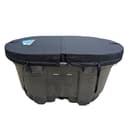
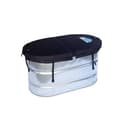
What each cover has to save you to pay for itself

This is the arithmetic every article in this category leaves out, and it is the only calculation we can do without inventing anything. A cover earns its money one way: by cutting the hours your chiller’s compressor runs. So take a live price, divide it by the value of one hour a day of avoided runtime, and you get a break-even in months.

The assumption is stated rather than buried. No chiller listing we have found publishes a rated wattage, so we use 600 W for the 1/2 HP class — deliberately the same figure as our companion arithmetic page, so the two cannot disagree. At 18.83 cents per kWh that makes one hour a day worth $3.44 a month.

CoverInsulating layer namedLive priceBreak-even, per hour/day saved
NEAMVCT Ice Tub Cover, 32 inNone named$14.994 months
Plunge Crafters ChillGuard Filter Housing SleeveNeoprene$19.986 months
SUNICO Insulated Ice Bath Cover, 32.5 in RoundInsulation cotton with aluminium foil and a silver-coated outer fabric$19.996 months
MQLD 100-Gallon Stock Tank Cover with ZipperNone named$21.996 months
The Pod Company Insulated Ice Pod LidSub-zero thermal insulation with an inflatable perimeter ring$27.008 months
COSFUN 100-Gallon Foil-Insulated Stock Tank CoverOne layer of 600D waterproof Oxford over one foil insulated layer$36.9911 months
Polar Protector 100-Gallon 5 mm Neoprene Slip SleeveNeoprene$69.9920 months
Polar Protector 100-Gallon Hard Insulated CoverExpanded polystyrene (EPS) foam core$189.994.6 years
Polar Protector 2x2x4 Magnetic Insulated Hard CoverExpanded polystyrene (EPS) foam core$199.994.8 years
Plunge Crafters Insulated Stock Tank Lid, 100 GallonThermal-insulated lining (composition not named)$299.957.3 years
Plunge Crafters Insulated Stock Tank Lid, 150 GallonThermal-insulated lining (composition not named)$339.958.2 years

Prices live as of August 15, 2026. Break-even is that price divided by $3.44 a month, the value of one hour a day of avoided runtime for a 600 W chiller at 18.83 cents per kWh. It is arithmetic on a stated assumption, not a measurement.

Now read that table the right way round, because it is easy to abuse. It does not say buy the cheapest cover. A cover that saves zero hours never breaks even at any price, and the two fastest break-evens in that table belong to covers with no insulating layer named at all — they are debris covers, and their real job is keeping leaves out, which they do well and cheaply. The table is a ceiling on what the expensive covers can be worth, not a ranking. A three-hundred dollar lid needs to save an hour a day for years, so it only makes sense where the thermal load is genuinely high: full sun, hot summers, a large uninsulated tank, a chiller running most of the day.

The inverse case is worth stating too. If you plunge on bagged ice rather than a chiller, there is no compressor to slow down and this table does not apply at all — what a cover saves you is ice, which is a real and larger saving, and one we cannot compute because it depends on your ambient temperature and how long the water sits between plunges.

What none of these listings will tell you

Every insulating material in the building trade is sold on a single number: thermal resistance, quoted as an R-value per inch. It is printed on loft insulation, on rigid foam board, on window units. Expanded polystyrene — the exact material in the two hard covers on this page — has a well-established R-value per inch in construction use. And yet not one of the eleven covers here quotes one.

We are not going to import a construction figure and apply it to a cold plunge lid, and it is worth explaining why, because the temptation is obvious. An R-value describes steady-state conduction through a flat assembly. A cover on a plunge is fighting conduction, convection through whatever gap it leaves, radiant solar gain onto its top surface, and evaporation from the water underneath it — and the last two are often the biggest terms. A number lifted from a wall assembly would look authoritative and predict very little. So the blank stays a blank.

What we will say plainly is that the absence is a choice. These sellers know their foam thickness, because threeof them published it. Any of them could commission a hold-time test — fill a tub, cover half the trials, record water temperature over eight hours — and none has. Until one does, the honest ranking is the one on this page: construction, seal, fit, weight, price. If you find an article that hands you a confident “reduces energy use by 30%” for a cold plunge cover, ask where the figure came from. We looked, and it is not in the listings.

The same silence surrounds the tubs, which is the more consequential version of the problem: only one of the five plunge tubs we compare publishes anything about insulation at all. A cover is the variable you control after the purchase. The walls are the one you either bought or did not, which is why a tub that will not hold temperature is so often a tub problem wearing a chiller problem’s clothes.

Frequently asked questions

Does a cold plunge cover actually keep the water colder?

The mechanism is not in dispute. Heat gets into your water three ways - warm air, sun on the surface, and evaporation - and a cover acts directly on the last two. What nobody will tell you is the size of the effect. Not one of the eleven covers compared here publishes an R-value, a hold time, a degrees-per-hour figure or an energy saving, and we have tested none of them. So we do the only honest thing available: we rank on the construction each listing does publish, and we show you what each cover has to save you per day to pay for itself. You supply the one variable we would otherwise have to invent.

What is the difference between an insulated cover and a debris cover?

A named layer, and about a hundred and seventy dollars. An insulated cover states what does the insulating - a foam core, a neoprene sheet, a foil layer - and the ones here range from a single reflective foil ply to a 2.5 inch expanded polystyrene slab. A debris cover is one layer of coated Oxford fabric with a drawstring: it keeps leaves, dust and insects out and it will not meaningfully slow your water warming up. Both are legitimate purchases for different problems. The trap is that both are sold under the same search term, and one of the covers here uses the word "insulated" in its copy while its own construction bullet describes only waterproof Oxford. Read the construction bullet, not the title.

Should I get a hard lid or a fabric cover?

Ask what you are actually fighting. If your tub sits in full sun and you run a chiller, a rigid foam lid is the only thing here with enough material in it to matter, and the two hard covers on this page are the ones that name a foam core. If your tub is shaded, or you plunge on ice rather than a chiller, or you take the cover off and on twice a day, a fabric cover at a twentieth of the price does the debris job and some of the solar job for far less money and far less lifting. There is also a practical point the listings gloss over: a 13 to 16 lb slab needs somewhere to go while you are in the water, and a fabric cover folds.

How do I know a cover will fit my tub?

Measure the tub, not the gallons. This is the single most common way to waste money in this category, because covers are cut for specific tank geometries and capacity does not determine outside dimensions - two 100-gallon tubs can be different shapes. nine of the eleven covers here publish their own dimensions, which is unusually good for this category, and the specification table on each card prints them. Take the outside length and width across the rim of an oval tank, or the outside diameter of a round one, and match that. If a listing only tells you a brand and a gallon figure, it is telling you it was cut for that exact tank and nothing else.

Do I need to cover the sides of the tub as well as the top?

Most people never consider it, and it is the more interesting question. A lid fights heat coming in from above; the walls of an uninsulated stock tank or inflatable are exchanging heat with the air across a much larger area all day. That is why the neoprene slip sleeve is on this page: it insulates the surface every other product here ignores. It is worth knowing that of the five plunge tubs we compare, only one publishes anything about wall insulation at all - so for most tubs, a sleeve is the only wall insulation on offer. If you buy one, you still need a lid; they are not alternatives.

Is a cover with locking clips worth it for safety?

If you have small children or animals with access to the tub, treat it as a different product category rather than a better cover. two of the eleven covers here make any child or pet access claim, both from the same maker, and both do it with four lockable clips rather than a cord. We want to be precise about what that is and is not: it is a manufacturer's claim about a fastening, worded as they word it, and we have not tested it. It is not a safety certification, none of these products carries one, and no cover substitutes for supervision or a fence where your local rules require one. A drawstring cover offers no barrier at all - that is not a criticism of it, it just is not what it is for.

How long does a cover take to pay for itself?

That depends on a number nobody publishes, which is why we show the calculation instead of an answer. Assuming a 1/2 HP class chiller drawing about 600 W - our stated assumption, since no chiller listing we have found publishes a rated wattage - one hour a day of avoided compressor time is worth roughly $3.44 a month at 18.83 cents per kWh. Divide any cover's price by that and you get its break-even in months per hour/day saved: the cheapest cover here clears it in a few months, the foam slabs take years. But read the next sentence before you act on that, because it is where this arithmetic gets abused: a cover that saves zero hours never breaks even at any price, and the cheapest covers here are precisely the ones that claim no insulation.

Will a cover keep the water clean as well?

It keeps leaves, dust, pollen and insects out, and that is a genuine benefit you will notice within a week - it is the cheapest water-care intervention there is, because the debris never gets in to be filtered or treated. What a cover will not do is address anything biological, and we are not going to make water-chemistry claims from a fabric listing. If your water goes cloudy the cover helps; if it goes slimy or smells, you have a sanitation problem and a cover is not the fix.

Why don't you give each cover a score out of ten?

Because a score implies a measurement, and the measurement that matters in this category does not exist in public. We could not put a number on thermal performance without either testing these covers or inventing a figure, and we have done neither. What we can do is print what each seller publishes side by side, mark the blanks as blanks, and argue the ranking in prose you can disagree with. Every empty cell in the specification tables above is a fact about the manufacturer, not a gap in our research.

Related

Sources

  • Seller listings for all eleven covers (Amazon detail pages)Every construction, thickness, dimension, attachment and weight figure on this page was read from the eleven listings themselves via the Amazon Creators API, and each card links its own source. All eleven were in stock and returned a live price when read. none of the eleven publishes an R-value. (accessed 2026-08-15)
  • U.S. Energy Information Administration — Electric Power Monthly, Table 5.6.AUS average residential price, April 2026 (released 2026-06-25). Your utility rate is the number that matters — override the default. Source of the 18.83 cents/kWh used in the break-even arithmetic above. (accessed 2026-07-16)
  • Ice & Cedar product registry — cold plunge tubsThe tub insulation count on this page is derived from our own registry at build time: 1 of 5 tub listings publish an insulation spec. Every listing is cited individually on that page. (accessed 2026-07-16)