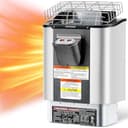
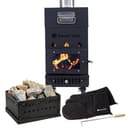
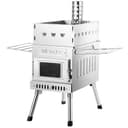
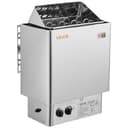
A sauna heater is one of the few appliances where the cheap version does the identical physical job. A kilowatt is a kilowatt: six kilowatts of element puts the same heat into the same room whether the badge says VEVOR or Harvia. What the money above this line buys is not heat. It is the things these five listings leave blank — not one publishes a stone capacity, not one publishes an amperage and not one publishes a warranty term.
The ranking criteria, in order:published output, because it is the only figure that sizes a heater to a room; what the listing says about the install, because a 240V appliance is an electrician’s job and a wood stove is a flue; the control type, because a stove you cannot set is a stove you have to watch; and then price, read live. Across these five heaters, three publish a rated output, three publish a room-volume range and three state a control type.
The finding that reorganises this bracket is that the budget crosses two fuels. Above a thousand dollars you are choosing between electric stoves, because that is what the branded catalogue mostly is at that price. Under it, a complete wood stove kit and a rocket stove both fit — and they answer a question electricity cannot: heat in a place with no circuit. That is why this page is not simply our main heater roundup with the dear ones removed. The decision changes shape at this price.
The second finding is a gap in the wood half. Neither wood stove here publishes a kilowatt rating, so the cost-per-kW column in the table below is empty for both, and you cannot size them to a room from the listing at all. For a sauna tent that matters less — the enclosure is the spec. For a built room it matters a great deal, which is why our wood-burning roundup ranks the branded wood stoves that do publish one.
We have not tested any of these; we own none of them. Here is exactly what we do instead. Every specification below was read from the seller’s own Amazon listing on the date printed on each card.