Can a cold plunge chiller be outside?
In practice yes - and 1 of the 8 chillers we compare will say so in writing. Here is what weather actually threatens, and the part of the setup that is a code requirement rather than a preference.
Last verified · Ice & Cedar editorial
The verdict
Yes, with three conditions, and silence from the seller is not permission. Only one chiller in our registry publishes an ingress rating — the Healcryo states IPX4 — and the other 7 say nothing about weather at all. The three conditions are the same for all of them: get it out of direct sun (heat, not rain, is what actually costs you performance and money), get it under a roof or an overhang rather than a tight cover (it has to breathe to reject heat), and put it on a GFCI-protected outdoor receptacle, which is a code requirement, not a nicety. Do those and an outdoor chiller is normal. Skip the first and you will pay for it on every electricity bill.
Nearly every real cold plunge setup puts the chiller outdoors, because that is where the tub is. Patios, decks, side returns, the end of a garage — the unit lives in the weather, and it almost always survives. The problem is that you cannot get a seller to confirm it.
Of the 8 chillers we track, 1 publishes an ingress protection rating. The Healcryo states IPX4, which in the IP system means protection against splashing water from any direction. The remaining 7 listings publish no IP figure, no weather claim and no prohibition either. That silence is the single most important fact on this page, and it cuts both ways: there is no manufacturer statement backing an outdoor install, and no manufacturer statement forbidding one.
So the useful version of this question is not “is it allowed”. It is what actually goes wrong outdoors, in what order, and which of those failures costs money. Three things do, and only one of them is water.
What weather actually threatens
1. Heat, which costs you continuously
This is the big one and it is not a failure, it is a tax. A chiller works by moving heat out of your water and rejecting it into the surrounding air. The warmer that air, the worse it is at the job. A unit sitting in full afternoon sun on a dark patio is fighting the heat in your tub andthe heat on its own casing, and it responds by running longer and cycling less — which shows up on your bill every month rather than as a dramatic breakdown.
Shade is therefore worth more to an outdoor chiller than horsepower is. North side of the house, under a deck, behind a fence panel, inside a vented lean-to — any of those beats upsizing the compressor, and all of them are free or nearly so.
2. Standing water and the electrical face
The compressor and the condenser coil are not the fragile parts. The control board, the display and the plug are. Rain running down a casing is a different thing from water pooling under one, and a cord connection lying in a low spot on a patio is the most common avoidable failure in an outdoor build.
Practical version: raise the unit off the ground on paving slabs or a plinth so water drains away under it, point the control face away from prevailing weather, and keep every electrical connection above the highest puddle the spot has ever held. None of that costs anything and it addresses the real risk rather than the imagined one.
3. Freezing, which threatens the loop rather than the chiller
In deep winter the compressor has little to do — ambient temperature is doing your cooling for you — so many people switch the unit off entirely. The risk migrates to the plumbing: hoses, the pump head and any inline filter housing hold water, and water that freezes in a sealed housing splits it. That is a genuine burst-pipe failure rather than an inconvenience.
Two options, and both are fine as long as you pick one. Shut down and drain the loop properly, or keep water circulating and insulate the exposed hardware. What does not work is leaving a full, still loop outside through a hard freeze. More on the seasonal side in cold plunge in winter.
Why a tight cover can be the wrong answer
The instinct is to buy a fitted cover for the chiller. It is half right. A chiller rejects heat into the air through a coil and a fan, so it needs free airflow at its inlet and outlet faces — and wrapping a running unit makes it work against its own exhaust, which is exactly the heat problem described above in a more concentrated form.
The rule that works: roof when running, cover when off. A deck overhang, a lean-to or a simple sloped board above the unit sheds rain without touching airflow. A fitted cover is for the weeks when the chiller is switched off and the weather is bad. In both cases, respect whatever clearance the manufacturer states around the vents — and where none is stated, which is most of them, leave a generous hand's width on every ventilated face.
What is worth insulating is the exposed hardware in the loop: hoses running across a sunny patio and an inline filter housing sitting in the open are both absorbing heat you have just paid to remove. A neoprene sleeve on the filter housing is a few dollars and addresses a real heat path.
What we would actually buy for an outdoor setup
Ranked on published specifications. Select a row to jump to the full write-up. We have not tested these units — here is exactly what we do instead.
| # | Product | Best for | Price |
|---|---|---|---|
| 1 | 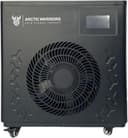 Healcryo 1.5 HP Pro MAX Cold Plunge Chiller The biggest compressor here and the only one that puts a BTU figure, a noise band and an ingress rating on the same listing. Sized for a tub that beat a smaller unit — and the rare chiller in this survey whose published numbers you can actually plan around. | Only one with a published IP rating | $989.95 · View on Amazon Price as of October 17, 2026. #ad How we’re funded |
| 2 | 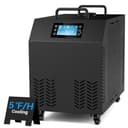 FADHOLE 1 HP 10,000 BTU Cold Plunge Chiller with Heater Publishes both ends of the range — 37°F cold and 107°F hot — so one appliance genuinely covers contrast therapy instead of implying it. It also states a BTU figure, which almost nothing else in this category does. | Best documented alternative | $1,299.99 · View on Amazon Price as of October 17, 2026. #ad How we’re funded |
| 3 | 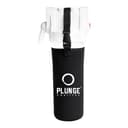 Plunge Crafters ChillGuard Filter Housing Sleeve The cover nobody searches for. If you run a chiller through an inline filter, that housing is a bare plastic radiator in your loop, and this is a twenty-dollar jacket for it. | Insulates the exposed loop hardware | $19.98 · View on Amazon Price as of October 17, 2026. #ad How we’re funded |
The electrical part, which is a requirement rather than advice
An outdoor cold plunge puts a 120V appliance, a pump and several hundred gallons of water in the same few feet of yard. Outdoor receptacles require GFCI protection under the National Electrical Code. That is not a preference, it does not depend on the chiller's listing, and it is the one item on this page we would not compromise on.
The complication is that the listings cannot help you plan it. Almost no chiller in this category publishes an amperage or a rated wattage — including the one we rank first overall — so you cannot work out from the spec sheet whether the unit can share a circuit with anything else that is already on it. The order of operations that avoids this entirely: site the tub, specify the receptacle with an electrician, then buy the chiller. Our cold plunge electrical requirements page covers what to ask for, and the extension cord question answers the shortcut most people are tempted by.
What outdoor siting does to your running cost
More than the chiller choice does. An outdoor tub gains heat from the air, from the sun on its walls and lid, and through its base into whatever it is standing on — and every one of those is heat the chiller has to remove again. That is why the highest-value purchases for an outdoor setup are not refrigeration at all: a lid to close the open water surface, and insulation under and around the tub.
The arithmetic is on cost to run a cold plunge, and the sizing consequence — that an uninsulated outdoor tank needs a chiller rated well above its gallons — is worked through on best chillers for a stock tank. If your plunge is going outdoors, read that one before you buy anything.
The short siting checklist
- Shade before everything. Out of afternoon sun, even if that means longer hose runs.
- Raised and draining. Slabs or a plinth so water passes under the unit rather than standing around it.
- Roof, not wrap, while running. Keep the vented faces clear; a sloped board above it is enough.
- Electrical face away from the weather, and every connection above the highest puddle.
- Short hose runs, insulated where exposed. Every sunny foot of hose is heat you paid to remove.
- GFCI receptacle, specified with an electrician, before the chiller is ordered.
- A winter decision made in advance— drain, or circulate and insulate. Not neither.
Frequently asked questions
Can a cold plunge chiller be outside?
In practice yes, and almost every stock tank and patio build runs one outdoors - but the listings will not back you up. Of the 8 chillers we compare, exactly 1 publishes an ingress protection rating (the Healcryo states IPX4, which covers splashing water from any direction). The other 7 say nothing at all about weather, and silence is not the same as permission. The sensible reading: a chiller is a refrigeration appliance that tolerates rain far better than it tolerates standing water, direct sun all afternoon, or a plug sitting in a puddle. Site it under cover, keep the air inlets clear, and put the receptacle somewhere water cannot pool.
Can a cold plunge chiller get wet?
Splashed, almost certainly fine. Submerged or rained into, no. The parts that fail are not the compressor and the coil - they are the control board, the display and the plug. An IPX4 rating, which only one unit here publishes, means protection against splashing water from any direction; it does not mean you can hose the unit down and it says nothing about a jet or immersion. Treat the electrical face of the chiller as the vulnerable side, point it away from the weather, and never let the cord's connection point sit where water collects.
Does a chiller outside need a cover?
A roof or an overhang is better than a fitted cover, for one specific reason: a chiller rejects heat into the air around it, so it needs free airflow at its inlet and outlet. Wrapping a running unit in a tight cover makes it work against its own exhaust. Use a cover when the chiller is OFF and the weather is bad, use a roof, a lean-to or a deck overhang when it is running, and in both cases leave the manufacturer's stated clearances around the vents - or, where none are stated, a generous hand's width on every ventilated face.
Will an outdoor chiller struggle in summer?
Yes, and this is the real penalty of siting one outdoors rather than any weather risk. A chiller's job is to move heat out of your water and into the surrounding air; the hotter that air, the less effectively it can do it. A unit sitting in full afternoon sun on a dark patio is working against both the heat in your tub and the heat on its own casing. Shade is worth more to an outdoor chiller than horsepower is - and an insulated tub with a lid is worth more than both, because it reduces the heat arriving in the first place.
What about freezing in winter?
Winter is easier on the chiller and harder on the plumbing. The compressor has almost nothing to do when ambient temperature is below your target, so many people simply switch the unit off in deep winter and let the weather hold the tub. The risk moves to the water in the loop: hoses, the pump head and any inline filter housing can freeze and split, and that is a burst-pipe failure rather than an inconvenience. If you are shutting down, drain the loop. If you are running through a freeze, keep water circulating and insulate the exposed hardware.
Does an outdoor chiller need a GFCI outlet?
Yes. Outdoor receptacles require GFCI protection under the National Electrical Code - that is a requirement rather than a recommendation, and it applies regardless of what the chiller's listing says or does not say. The complication is that almost no chiller in this category publishes an amperage or a rated wattage, so you cannot work out from the listing whether the unit can share a circuit with anything else. Site the tub, then specify the receptacle with an electrician, then buy the chiller - in that order.
Related
- Best cold plunge chillers - including the only one that publishes an IP rating
- Best chillers for a stock tank - sizing for an uninsulated outdoor tub
- TURBRO 1 HP chiller review - our top pick, and the electrical specs it leaves blank
- Should you leave a cold plunge chiller on all the time?
- Cold plunge chiller cover - when a cover helps and when it hurts
- Cold plunge in winter - the freeze plan for an outdoor setup
- How to drain a cold plunge - including the loop
- Backyard cold plunge - siting the whole setup
- Do you need a GFCI for a cold plunge? - outdoors, yes
- Cold plunge electrical requirements - what to ask an electrician for
- Best cold plunge covers - the highest-value purchase for an outdoor tub
- What a cold plunge costs to run - why shade beats horsepower
Sources
- NEC 210.8(F) — GFCI protection for outdoor outlets (2023 NEC) — Applies to outdoor outlets on single-phase circuits 150V-or-less to ground and 50A-or-less. Exceptions apply; confirm with your AHJ. (accessed 2026-07-16)
- Manufacturer listings for every chiller in our registry (Amazon detail pages) — The IPX4 rating attributed to the Healcryo, and the absence of any ingress rating on the other chillers we track, were read from the manufacturers' own listings. No listing in this category publishes a rated wattage or an amperage, which is why this page tells you to specify the circuit with an electrician rather than quoting one. The siting guidance here is general appliance practice, not a manufacturer instruction. (accessed 2026-10-17)