Should you leave a cold plunge chiller on all the time?
Yes, for almost everyone - and the reason is not electricity. It is that nobody publishes how long a pulldown takes, so a switch-it-off routine is a plan you cannot make.
Last verified · Ice & Cedar editorial
The verdict
Leave it on.Water has a large thermal mass, so pulling a few hundred gallons from room temperature down to plunge temperature takes most of a day on a domestic chiller — and you cannot plan around it, because no chiller in our registry publishes an hours-to-target figure at a stated ambient temperature. Leaving the unit on lets it cycle to a setpoint, which is the operating mode this class of appliance is built for. On our stated assumptions, holding costs roughly $46.78 a month against roughly $31.82for crashing it before four sessions a week — closer than people expect, and both dominated by the same lever: insulation and a lid change your bill more than scheduling does. The one real exception is plunging once a week or less.
This question is usually asked as an electricity question, and it is really a thermal mass question. Water takes a great deal of energy to cool and gives it up slowly. That cuts both ways: a tub at temperature holds itself reasonably well, and a tub at room temperature takes a long time to come down.
Which means the real choice is not “on” versus “off”. It is holding— the compressor cycling to maintain a setpoint, like a refrigerator — versus crashing, a long full-output run before each session. And the decisive fact about crashing is that you cannot schedule it: not one of the 8 chillers we compare publishes hours-to-target at a stated ambient temperature. One publishes a cooling rate in degrees per hour but names no ambient, so it is not checkable either.
We have not measured any of these units. What we do instead of testing is read what the manufacturers publish, compute what can be computed from it, and state our assumptions in the open where they cannot. Every dollar figure below is arithmetic on an assumption that is named on the page.
Holding versus crashing, costed honestly
Here is the problem with costing this precisely: not one of the 8 chillers in our registry publishes a rated wattage. So we cannot tell you what your unit draws, and anyone who quotes you a precise monthly figure for a named chiller is inventing it. What we can do is price a stated scenario.
Treat the chiller as a 1 kW appliance. Then:
- Holding. On all the time, compressor cycling about 35% of the time to maintain setpoint in an insulated tub. That is about 255 kWh a month, or $46.78 at the US average residential rate of 18.31 cents per kWh.
- Crashing. Off between sessions, then 10 hours at full output before each of four plunges a week. That is about 174 kWh a month, or $31.82.
Two honest observations about those numbers. First, they are much closer than the instinct behind the question assumes — switching the unit off is not the big saving people imagine, because the pulldown you then have to pay for is long and runs at full output rather than cycling. Second, every input is a dial: a hotter garage raises the hold duty cycle, a lid lowers it, and your own electricity rate may be half or triple the national average. The same arithmetic with your own numbers is on cost to run a cold plunge.
The compressor argument, which favours leaving it on
A chiller left on does not run continuously. It cycles: the compressor starts when the water drifts above setpoint and stops when it gets back down, exactly as your refrigerator does all day without anyone worrying about it. That duty cycling is the operating mode the appliance was designed around.
A switch-it-off routine replaces that with repeated long runs at full output from a warm start, which is the harder of the two patterns on a compressor. We will not dress this up as a manufacturer finding — nobody in this category publishes a duty-cycle rating, a compressor life figure or a warranty condition about scheduling, and most of them will not even publish a noise level. It is reasoning from how refrigeration works, and it points the same way as the cost arithmetic.
Why a smart plug is the wrong tool
The obvious hack is a timer or a smart plug. Two problems, and the second is the serious one.
A refrigeration compressor should not be restarted immediately after it shuts down — it needs an anti-short-cycle delay, which its own controller provides and a plug cutting power does not. And a plug cannot see your water temperature, so it is scheduling blind against the one variable that decides whether the tub is usable. If you want a schedule, buy a unit whose own controller does it: one kit we compare publishes app-based scheduling, which is the chiller deciding with a thermometer in the loop.
What actually changes the number: the tub, not the schedule
The hold duty cycle in the arithmetic above is a property of your tub, not your chiller. Heat arrives through the walls, through the base and across the open water surface, and the chiller removes exactly as much as arrives. Reduce the arriving heat and the hold cost falls every hour, for as long as you own the setup.
In rough order of value: a lid, because the open surface is usually the largest single path; insulation under the base, because a tub standing on a warm patio conducts heat straight up into the water; and shade, which is free. All three beat scheduling, and all three beat a bigger compressor. That is why the picks below start with a cover rather than a chiller.
What to buy instead of switching it off
Ranked on published specifications. Select a row to jump to the full write-up. We have not tested these units — here is exactly what we do instead.
| # | Product | Best for | Price |
|---|---|---|---|
| 1 | 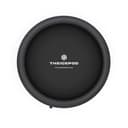 The Pod Company Insulated Ice Pod Lid The only cover here that floats on the water instead of sitting over it, which removes the air gap every rim-mounted lid leaves behind. It also publishes its thickness, which almost nothing in this category does. | Cheapest real reduction in hold cost | $18.99 · View on Amazon Price as of October 17, 2026. #ad How we’re funded |
| 2 | 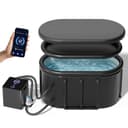 1stplunge 1/3 HP WiFi Chiller + 148 Gal Insulated Tub Kit Publishes a noise figure and a filter micron rating, which is two more checkable numbers than most of this category manages. Same 1/3 HP against 148 gallons problem as the kit above, without the ports. | If you want a schedule you can set | $509.00 · View on Amazon Price as of October 17, 2026. #ad How we’re funded |
| 3 | 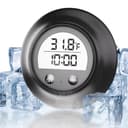 Generic Silicone Cover Ice Bath Thermometer with Timer A thermometer with a timer is the one accessory that changes behavior: it stops you guessing both the temperature and the duration. | So you know what it is actually holding | $17.99 · View on Amazon Price as of October 17, 2026. #ad How we’re funded |
The case for switching it off
There is one, and it is specific: you plunge once a week or less. Holding a tub at temperature for seven days to use it for five minutes is paying for 168 hours of cooling for one session, and at that frequency the crashing arithmetic wins easily even with a long pulldown.
Two things make that routine workable. A thermometer, so you know when the tub is ready instead of guessing — the figure the chiller cannot tell you is exactly the figure a $20 instrument can. And an insulated tub with a lid, so the pulldown you paid for lasts through the day you wanted it. If you are in this bracket, it is also worth reading the cheapest way to cold plunge: a once-a-week plunger with a well-insulated tub may genuinely be better served by bagged ice than by refrigeration, and how much ice for an ice bath has the quantities.
If you are shutting it down for a season
Switching off for winter is a different decision and often a sensible one — when ambient temperature is below your setpoint, the weather is doing your cooling. The risk moves from the compressor to the plumbing: water left in hoses, a pump head or an inline filter housing can freeze and split them. Drain the loop, or keep water circulating and insulate the exposed hardware. The seasonal detail is in cold plunge in winter and can a cold plunge chiller be outside.
Frequently asked questions
Should you leave a cold plunge chiller on all the time?
For almost everyone, yes - and the reason is pulldown rather than electricity. Water has a large thermal mass, so cooling a few hundred gallons from room temperature down to plunge temperature takes most of a day with a domestic chiller. If you switch the unit off between sessions you are not saving a run, you are committing to a long pulldown before every plunge, and you cannot plan it: not one chiller in our registry publishes an hours-to-target figure at a stated ambient temperature. Leaving it on lets the unit cycle to maintain a setpoint, which is what this class of appliance is designed to do.
Is it cheaper to leave a chiller on or turn it off?
Holding is usually cheaper than crashing, and always more predictable. On our stated assumptions - a 1 kW appliance, cycling about 35% of the time to hold temperature, against the same appliance running flat out for 10 hours before each of four sessions a week - holding comes to roughly $46.78 a month and crashing to roughly $31.82. Those numbers are arithmetic on assumptions we state, not measurements: no chiller in this category publishes a rated wattage, and only 3 of 8 publish a cooling capacity at all. The honest conclusion is that the two are closer than people expect, and that insulation changes the answer more than scheduling does.
Does leaving a chiller on all the time wear it out?
A chiller left on does not run continuously - it cycles, exactly as a refrigerator does, switching the compressor on when the water drifts above setpoint and off when it reaches it. That duty cycling is the operating mode the appliance was designed around. What is harder on a compressor is repeated long runs at full output from a warm start, which is precisely what a switch-it-off-between-sessions routine produces. Nobody in this category publishes a duty-cycle rating or a compressor life figure, so this is reasoning from how refrigeration works rather than from a manufacturer claim.
How long does a cold plunge chiller take to get cold?
Nobody will tell you, and that is the single most useful thing to know before you plan around it. The figure you need is hours-to-target at a stated starting temperature and ambient temperature, and no listing in our registry publishes it. One publishes a cooling RATE - degrees per hour on a stated volume - but names no ambient temperature, so it is not checkable. What you can reason from is cooling capacity in BTU per hour, which 3 of 8 listings state. The practical shape: a small insulated tub overnight, a large or uninsulated one considerably longer.
Can you put a cold plunge chiller on a timer or a smart plug?
Mechanically yes, and it is a bad idea for two reasons. A refrigeration compressor should not be restarted immediately after shutdown - it needs its own anti-short-cycle delay, and a dumb timer cutting power does not respect that. And a timer cannot see your water temperature, so it is guessing at exactly the thing that matters. If you want scheduling, buy a unit whose own controller supports it: one of the kits we compare publishes app-based scheduling, which is the chiller making the decision with a thermometer in the loop rather than a plug making it blind.
What if I only plunge once a week?
Then switching it off is defensible, and it is the one case where it clearly is. Holding a tub at temperature for seven days to use it once is paying for 168 hours of cooling for a five-minute plunge. The trade is that you commit to a long pulldown the day before, and you will want a thermometer to know when it is ready rather than guessing. A once-a-week plunger with a well-insulated tub and a lid is also the profile most likely to be better served by ice than by refrigeration - our cheapest-way-to-plunge guide runs that comparison.
Related
- What a cold plunge costs to run - the same arithmetic with your own numbers
- What size chiller do I need? - sizing against volume and insulation
- Can a cold plunge chiller be outside? - siting, weather and the GFCI requirement
- Best cold plunge chillers - which listings publish a cooling capacity
- TURBRO 1 HP chiller review - our top pick, read spec by spec
- Cold plunge not getting cold - when holding is not working
- How to keep a cold plunge cold without a chiller
- The cheapest way to cold plunge - ice versus refrigeration
- Best cold plunge covers - the biggest single lever on hold cost
- Best cold plunge thermometers - so you know what it is actually holding
- Cold plunge maintenance - what running continuously means for the water
Sources
- U.S. Energy Information Administration — Electric Power Monthly, Table 5.6.A — The 18.31c/kWh rate behind both figures on this page. The wattage and duty cycles they are applied to are OUR stated assumptions (1000 W; 35% cycling to hold; 10 hours at full output to crash) - no chiller in this category publishes a rated power, so no precise per-unit figure is available to anyone. (accessed 2026-10-09)
- Manufacturer listings for every chiller in our registry (Amazon detail pages) — The absence of a published pulldown time, rated wattage, duty-cycle rating or compressor life figure across this category was established by reading the manufacturers' own listings, each of which is linked per product on our chiller pages. The compressor-cycling reasoning here is general refrigeration practice, not a manufacturer claim. (accessed 2026-10-17)