ICE & CEDAR

The best cold plunge chillers for a stock tank, sized for a tank with no insulation

A stock tank is a different cooling load from the insulated pod these units are rated against. 6 of the 8 chillers we track publish a gallon ceiling; none of them publishes one for bare steel.

Last verified · Ice & Cedar editorial

The verdict

Buy the Healcryo 1.5 HP.It is the largest compressor we compare, it publishes a 12,000 BTU/h cooling capacity and a 200-gallon ceiling — which derates to a comfortable ~130-gallon stock tank — and it is the only chiller in our registry that publishes an ingress rating at all, which matters because a stock tank lives outdoors and so does its chiller. If your tank is a 100-gallon round and your budget is the constraint, the 1/2 HP Vikua publishes a 145-gallon ceiling at a quarter of the price and is the sensible buy provided you put a lid on the tank. Whatever you pick: insulate before you upsize. A lid and foam under the base do more for your running cost than a bigger compressor does.

A stock tank is the best-value cold plunge in this hobby and the worst thermal envelope in it. Galvanised steel is a radiator: it conducts heat in from the air, from the sun and from whatever surface it is sitting on, with no foam anywhere in the path. That matters here because every gallon ceiling published in this category is derived from an insulated plunge tub, and nobody publishes a figure for bare steel.

So the number on the listing is not the number for your build. Our read — stated as a read, not as a manufacturer rating — is to treat a seller's gallon ceiling as an insulated-tub figure and plan for a tank no larger than about two thirds of it. The tables below carry both numbers side by side: the published ceiling, and that ceiling derated. On that basis a 100-gallon stock tank wants a unit rated for 150 gallons, not 100.

Two other things change when the tub is a farm tank, and both are in the ranking. The chiller sits outside, and only one listing in the whole category publishes a weather rating. And the tank has no ports, so the loop runs over the rim, which makes a self-priming pump a requirement rather than a feature. We own none of these units and have measured none of them; what we do instead is read the published specs and reason from them out loud.

Quick picks

Ranked on published specifications. Select a row to jump to the full write-up. We have not tested these units — here is exactly what we do instead.

#ProductPublished ceilingStock tank maxBest forPrice
1
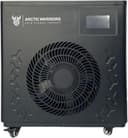
Healcryo 1.5 HP Pro MAX Cold Plunge Chiller

Healcryo 1.5 HP Pro MAX Cold Plunge Chiller

The biggest compressor here and the only one that puts a BTU figure, a noise band and an ingress rating on the same listing. Sized for a tub that beat a smaller unit — and the rare chiller in this survey whose published numbers you can actually plan around.

200 gal130 galBest overall
$989.95 · View on Amazon

Price as of October 17, 2026. #ad How we’re funded

2
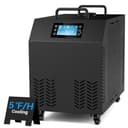
FADHOLE 1 HP 10,000 BTU Cold Plunge Chiller with Heater

FADHOLE 1 HP 10,000 BTU Cold Plunge Chiller with Heater

Publishes both ends of the range — 37°F cold and 107°F hot — so one appliance genuinely covers contrast therapy instead of implying it. It also states a BTU figure, which almost nothing else in this category does.

216 gal140 galBest if the tank runs hot too
$1,299.99 · View on Amazon

Price as of October 17, 2026. #ad How we’re funded

3
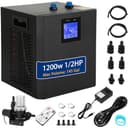
Vikua 1/2 HP Ice Bath Water Chiller, 145 Gallon (110V)

Vikua 1/2 HP Ice Bath Water Chiller, 145 Gallon (110V)

The largest compressor here that still names a 110V supply, and the only plug-in that publishes a cooling rate. A half-horse unit on an existing garage outlet is the honest ceiling if you are not paying an electrician.

145 gal95 galBest value for a 100-gallon tank
$359.99 · View on Amazon

Price as of October 17, 2026. #ad How we’re funded

4
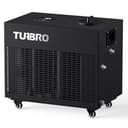
TURBRO 1 HP 9,300 BTU Cold Plunge Chiller

TURBRO 1 HP 9,300 BTU Cold Plunge Chiller

One of only two chillers here that publishes a BTU figure, which is the number that actually predicts pulldown. That transparency, plus dual filters and an ozone generator, is why it leads.

Not publishedNot publishedHighest cooling capacity per dollar
$1,399.00 · View on Amazon

Price as of October 17, 2026. #ad How we’re funded

5
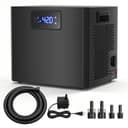
FADHOLE 1/3 HP Cold Plunge Chiller (CPWC016, 115V)

FADHOLE 1/3 HP Cold Plunge Chiller (CPWC016, 115V)

A 1/3 HP plug-in that is unusually willing to say where it stops: 42°F, 79 gallons and a stated 2°F-per-hour pulldown, on a standard 115V outlet. The compressor is still small — the disclosure is the reason to pick it.

79 gal50 galSmallest that states its own limit
$340.00 · View on Amazon

$359.996% off

Price as of October 17, 2026. #ad How we’re funded

6
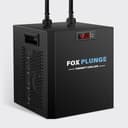
Fox plunge 1/3 HP Ice Bath Water Chiller (FOX-KEY 300-2)

Fox plunge 1/3 HP Ice Bath Water Chiller (FOX-KEY 300-2)

The cheapest way to stop buying ice, and unusually willing to say where it stops: 41°F, best between 40 and 53 gallons, and never past 79. A 1/3 HP compressor is genuinely small — but this is the rare listing that tells you so itself.

79 gal50 galCheapest, for a small tank only
$279.95 · View on Amazon

Price as of October 17, 2026. #ad How we’re funded

How we ranked them

  1. Published gallon ceiling, derated. The first filter, because sizing is the decision. 6 of the 8 chillers we track publish a ceiling; the two that do not cannot be sized from their own listing, which costs them.
  2. Published cooling capacity in BTU/h. The spec that actually predicts pulldown, and only 3 listings in this category state one. Horsepower is a proxy for it; BTU is the thing itself.
  3. Does it say anything about living outdoors? One chiller publishes an ingress rating. That is worth a rank on a page about a tub that cannot come inside.
  4. What else is in writing? Minimum temperature, filtration, voltage, warranty. Amperage and rated watts are blank on nearly every unit in this category, which is a real limitation when you are planning an outdoor circuit.

No scores and no pulldown times. Only one listing here publishes a cooling rate and it names no ambient temperature, so it is not checkable; inventing a time-to-temperature figure would be exactly the kind of testing theater this site exists to avoid.

Why the derate, in plain terms

A chiller does not cool water once. It removes the heat that keeps arriving. In an insulated pod with a lid, that arriving heat is small, so a modest compressor holds temperature while cycling on and off. In a bare steel tank in the open, heat arrives continuously through the walls, the base and the open surface — and the same compressor runs near-continuously to stand still.

That is why the fix is not always a bigger unit. The three biggest heat paths in a stock tank build, in rough order, are the open water surface, the uninsulated walls, and conduction through the base into whatever the tank sits on. A lid addresses the first for well under a hundred dollars; rigid foam or a reflective wrap addresses the second and third. Do those and a 1/2 HP unit is a genuine answer on 100 gallons. Skip them and a 1 HP unit is working hard. The detail is in the stock tank build guide and the sizing arithmetic in what size chiller do I need.

The plumbing problem a stock tank creates

Purpose-built plunge tubs increasingly ship with bulkhead fittings you can plumb a chiller into. A stock tank has nothing of the kind, so you have two options and they are not equivalent.

Hoses over the rimis the reversible one and what most builds use. The requirement it puts on the chiller is a pump that can lift water over the tank wall and re-prime itself after a drain — two of the picks here state a self-priming pump on the listing. Keep the runs short: every extra foot of hose outside the water is a foot of hose warming up in the sun.

Drilling a bulkhead gives a tidier loop and commits the tank permanently. It also introduces the one failure mode a plunge setup genuinely cannot tolerate, which is a leak below the waterline. If you go this way, use proper bulkhead hardware rather than a hose barb and sealant, and do it before the tank is in position rather than after.

Outdoors means GFCI, not maybe

A stock tank build puts a 120V appliance, a pump and several hundred gallons of water in a yard. Outdoor receptacles require GFCI protection under the code — this is not a preference and not a nice-to-have — and the chiller's own listing is almost never going to tell you about it. Nor will most of these listings tell you the amperage, so you cannot confirm from the spec sheet whether the chiller and anything else can share the circuit.

The practical sequence is: site the tank, then site the receptacle, then buy the chiller — not the other way around. Our cold plunge electrical requirements page covers what to ask for, and do you need a GFCI for a cold plunge answers the specific question directly.

#1Best overall

Healcryo 1.5 HP Pro MAX Cold Plunge Chiller

The biggest compressor here and the only one that puts a BTU figure, a noise band and an ingress rating on the same listing. Sized for a tub that beat a smaller unit — and the rare chiller in this survey whose published numbers you can actually plan around.

Strengths

  • 1.5 HP and a published 12,000 BTU/h — the largest compressor and the highest stated cooling capacity compared here
  • Published 35-120°F range covers heat as well as cold, with a stated 200-gallon working ceiling
  • Publishes 35-55 dB and an IPX4 outdoor rating — figures the rest of this category leaves blank
  • Self-priming pump, ozone module and a 3-stage 20-micron filter are in the box, not extras

Trade-offs

  • Oversized and overpriced for a standard 100-gallon tub
  • Amperage and rated watts are still not published, so you cannot confirm circuit headroom from the listing
  • No warranty term stated anywhere on the listing
  • The ozone module and app control add failure points a plain chiller does not have
Compressor1.5 HP
Cooling capacity (published)12,000 BTU/h
Gallon ceiling (published, insulated tub)200 gal
Our stock tank ceiling (derated two thirds)130 gal
Coldest stated temperature35°F
Heat functionYes
Filtration includedYes
Voltage (published)120V
Amperage (published)Not published
Rated power (published)Not published
WarrantyNot published

Specifications as published by the manufacturer listing, read on September 18, 2026. Blank fields are specs the manufacturer does not publish.

#2Best if the tank runs hot too

FADHOLE 1 HP 10,000 BTU Cold Plunge Chiller with Heater

Publishes both ends of the range — 37°F cold and 107°F hot — so one appliance genuinely covers contrast therapy instead of implying it. It also states a BTU figure, which almost nothing else in this category does.

Strengths

  • Publishes a 37°F floor AND a 107°F ceiling — the only unit here that puts a number on both halves of contrast therapy
  • States 10,000 BTU cooling capacity — one of only two listings here that publishes one at all
  • Three-stage filtration with an ozone stage and a built-in circulating pump, in the box
  • Publishes 45 dB and a one-year warranty, both stated on the listing rather than left blank

Trade-offs

  • No amperage, rated watts or voltage published, so you cannot confirm the circuit from the listing
  • The published cooling rate — 132 gallons at about 6°F per hour — names no ambient temperature, so it is not checkable
  • 216-gallon ceiling rules it out of the largest tubs
Compressor1 HP
Cooling capacity (published)10,000 BTU/h
Gallon ceiling (published, insulated tub)216 gal
Our stock tank ceiling (derated two thirds)140 gal
Coldest stated temperature37°F
Heat functionYes
Filtration includedYes
Voltage (published)Not published
Amperage (published)Not published
Rated power (published)Not published
Warranty12 months

Specifications as published by the manufacturer listing, read on September 3, 2026. Blank fields are specs the manufacturer does not publish.

#3Best value for a 100-gallon tank

Vikua 1/2 HP Ice Bath Water Chiller, 145 Gallon (110V)

The largest compressor here that still names a 110V supply, and the only plug-in that publishes a cooling rate. A half-horse unit on an existing garage outlet is the honest ceiling if you are not paying an electrician.

Strengths

  • Publishes 110V/60Hz outright — runs from a standard outlet, no electrician needed
  • States a 1,200W cooling capacity and a 145-gallon ceiling, so you can size it before you buy
  • Publishes a 41°F floor AND a 1.8–3.6°F-per-hour cooling rate — almost nothing in this category states a rate at all
  • Titanium evaporator coil and a stated 35 dB compressor
  • Ships with the pump, filter assembly, remote, hoses and fittings

Trade-offs

  • 1.8–3.6°F per hour is slow by design — on 145 gallons that is an overnight pulldown, not an afternoon one
  • Amperage and rated input watts are not published, so you cannot confirm circuit headroom from the listing (the 1,200W figure is cooling output, not draw)
  • No warranty term published
Compressor1/2 HP
Cooling capacity (published)Not published
Gallon ceiling (published, insulated tub)145 gal
Our stock tank ceiling (derated two thirds)95 gal
Coldest stated temperature41°F
Heat functionNot published
Filtration includedYes
Voltage (published)120V
Amperage (published)Not published
Rated power (published)Not published
WarrantyNot published

Specifications as published by the manufacturer listing, read on September 29, 2026. Blank fields are specs the manufacturer does not publish.

#4Highest cooling capacity per dollar

TURBRO 1 HP 9,300 BTU Cold Plunge Chiller

One of only two chillers here that publishes a BTU figure, which is the number that actually predicts pulldown. That transparency, plus dual filters and an ozone generator, is why it leads.

Strengths

  • Publishes 9,300 BTU cooling capacity — only one other listing here states one
  • Dual filters and ozone generator included
  • Insulated pipes, wheels and handles for a garage setup

Trade-offs

  • Most expensive chiller in this comparison
  • Amperage and rated watts are not published
Compressor1 HP
Cooling capacity (published)9,300 BTU/h
Gallon ceiling (published, insulated tub)Not published
Our stock tank ceiling (derated two thirds)Not published
Coldest stated temperatureNot published
Heat functionNot published
Filtration includedYes
Voltage (published)Not published
Amperage (published)Not published
Rated power (published)Not published
WarrantyNot published

Specifications as published by the manufacturer listing, read on July 16, 2026. Blank fields are specs the manufacturer does not publish.

#5Smallest that states its own limit

FADHOLE 1/3 HP Cold Plunge Chiller (CPWC016, 115V)

A 1/3 HP plug-in that is unusually willing to say where it stops: 42°F, 79 gallons and a stated 2°F-per-hour pulldown, on a standard 115V outlet. The compressor is still small — the disclosure is the reason to pick it.

Strengths

  • Runs on a standard 115V outlet — no new circuit
  • Publishes a 42°F floor and a 79-gallon ceiling, so you can size it before you buy
  • Publishes a 2°F/hour cooling rate — one of only two chillers here that state a pulldown figure at all
  • Built-in pump and a washable metal filter, with insulated hoses, fittings and a submersible pump for a port-less bathtub in the box
  • Publishes a one-year warranty

Trade-offs

  • No BTU, amperage or rated watts published, so you cannot confirm outlet headroom from the listing
  • 1/3 HP pulls down slowly; at its own stated 2°F/hour a warm tub is an overnight job
  • Quiet operation is claimed but never given a decibel figure
Compressor1/3 HP
Cooling capacity (published)Not published
Gallon ceiling (published, insulated tub)79 gal
Our stock tank ceiling (derated two thirds)50 gal
Coldest stated temperature42°F
Heat functionNot published
Filtration includedYes
Voltage (published)120V
Amperage (published)Not published
Rated power (published)Not published
Warranty12 months

Specifications as published by the manufacturer listing, read on September 18, 2026. Blank fields are specs the manufacturer does not publish.

#6Cheapest, for a small tank only

Fox plunge 1/3 HP Ice Bath Water Chiller (FOX-KEY 300-2)

The cheapest way to stop buying ice, and unusually willing to say where it stops: 41°F, best between 40 and 53 gallons, and never past 79. A 1/3 HP compressor is genuinely small — but this is the rare listing that tells you so itself.

Strengths

  • Lowest-cost chiller compared here
  • Publishes a 41°F floor and a 79-gallon ceiling — most listings here state neither
  • Publishes 110V, so you can confirm it runs off a normal outlet before you buy
  • External filter, pump and hose in the box, with filter media you rinse rather than replace

Trade-offs

  • 1/3 HP is the smallest compressor here — expect long pulldown
  • The listing's own 40–53 gallon sweet spot rules it out of any large tub
  • No BTU, amperage or rated watts published
  • No warranty term stated anywhere on the listing
Compressor1/3 HP
Cooling capacity (published)Not published
Gallon ceiling (published, insulated tub)79 gal
Our stock tank ceiling (derated two thirds)50 gal
Coldest stated temperature41°F
Heat functionNot published
Filtration includedYes
Voltage (published)120V
Amperage (published)Not published
Rated power (published)Not published
WarrantyNot published

Specifications as published by the manufacturer listing, read on September 18, 2026. Blank fields are specs the manufacturer does not publish.

Who should skip this page

If your tub is an insulated pod or a foam-walled barrel rather than a farm tank, the derate on this page is penalising you for a problem you do not have. Go to best cold plunge chillers, which ranks the same units on horsepower and published cooling capacity without the uninsulated-vessel assumption, or best cold plunge chiller for the money if price leads.

And if you have not bought the tank yet, it is worth pricing a complete insulated tub-and-chiller system against tank-plus-chiller-plus-lid. The bundled systems arrive matched, insulated and ported, and the price gap is smaller than the stock-tank route's reputation suggests once you have bought the lid and the foam.
Frequently asked questions

What size chiller do I need for a stock tank?

Bigger than the tank's gallons suggest, because a stock tank is uninsulated. Every gallon ceiling published in this category is derived from an insulated plunge tub, and bare galvanised steel sheds cold far faster than a foam-walled pod - so the honest approach is to treat the seller's figure as an insulated-tub number and plan for a tank no larger than about two thirds of it. On that reading, a 100-gallon stock tank wants a chiller rated for 150 gallons or more, which in practice means 1/2 HP at minimum and 1 HP if your tank sits in sun. This is our read of the physics rather than a manufacturer rating; nobody in this category publishes a figure for an uninsulated vessel.

Can a cold plunge chiller sit outside with the tank?

Most of them do not say. Exactly one chiller in our registry publishes an ingress rating - the Healcryo states IPX4 - and the rest of this category says nothing at all about weather, which is not the same as saying it is fine. A refrigeration unit is an outdoor-capable appliance in principle, but the control board, the display and the plug are the parts rain finds. Until a seller publishes a rating, treat an unrated chiller as needing a cover, a roof or a wall, and never let the receptacle sit where it can take standing water. Our dedicated guide covers this properly.

How do you connect a chiller to a stock tank with no ports?

Hoses over the rim, which is how most stock tank builds run and works fine, or a bulkhead fitting if you are willing to drill the tank. The over-the-rim approach needs two things from the chiller: a pump that can lift water over the wall and prime itself, and hoses long enough to reach wherever the chiller sits. Two picks here ship with a self-priming pump stated on the listing. If you drill, you are committing the tank permanently and introducing the one failure mode a plunge setup really cannot tolerate - a leak below the waterline - so do it with proper bulkhead hardware or not at all.

Is it cheaper to insulate the tank or buy a bigger chiller?

Insulate, almost always, and it is not close. Insulation is a one-time cost that reduces the heat your chiller has to remove every hour for the life of the setup, while a bigger compressor costs more to buy AND more to run. The two highest-value additions are a lid - the open water surface is usually the single largest heat path - and rigid foam or a reflective wrap on the walls and under the base, because a tank sitting directly on a hot patio conducts heat straight through its floor. Do both and the 1/2 HP units on this page become genuinely viable on a 100-gallon tank.

Do these chillers run on a normal outlet?

The ones that publish a voltage do. Six of the eight chillers we track publish 120V and are sold as plug-in units, which is the right answer for a patio build where running a new circuit to an outdoor location means a trench or a wall penetration. What almost none of them publish is amperage or rated watts - so you cannot confirm from the listing whether two appliances can share a circuit. If the tank is outdoors, the receptacle needs GFCI protection regardless; that is a code requirement for outdoor outlets, not a preference.

Will a chiller get a stock tank cold enough?

The published floors in this category run from 35°F to 42°F, which is colder than anyone needs - plunge temperature is normally discussed in the 39 to 55°F band. The real question is not how cold but how fast and whether it holds, and that is where an uninsulated tank punishes an undersized unit: it will reach temperature overnight and then fight ambient heat gain all day, running near-continuously and costing you accordingly. A unit that is comfortably oversized for the volume cycles instead of running flat out, which is cheaper and kinder to the compressor.

Related

Sources

  • Manufacturer listings for all six chillers (Amazon detail pages) — Every horsepower, BTU figure, gallon ceiling, minimum temperature, ingress rating and warranty term above was read from the manufacturer's own listing and is linked per product on each card. The 'stock tank max' column is OUR derate of the published ceiling, labelled as such: no listing in this category publishes a rating for an uninsulated vessel. Blank fields are specs the manufacturer does not publish - in this category that includes amperage and rated watts on almost every unit. (accessed 2026-10-17)