ICE & CEDAR

The best cold plunge chiller for a bathtub

A bathtub is uninsulated and you drain it after every use - which makes it the hardest thing to keep cold. Here is which chiller handles it, and the honest limits of the idea.

Last verified · Ice & Cedar editorial

Using the bathtub you already own is the cheapest way to try a real chiller-cooled plunge — no new tub to buy or find room for. It is also the setup that asks the most of the chiller, and being honest about why is the whole point of this page.

A bathtub is a single uninsulated skinof acrylic or porcelain against room air, holding maybe 40–60 gallons. It gains heat continuously, so the chiller never gets to coast. And because you drain it after every session, there is no cold water to top up — the chiller pulls a fresh, room-temperature fill down from scratch each time. A dedicated insulated tub, by contrast, keeps its cold between uses and lets the chiller sip. Same machine, a much harder job.

So the ranking below is not the same as our general chiller list. Here the questions are narrower: does it plug into a normal outlet, can you move it to the bathroom, and does it have enough capacity to overcome a bathtub’s heat gain in a reasonable time? We reward the plug-in, portable, honestly-rated units — and flag where a listing tells you nothing.

We have not tested any of these; we own none of them. Here is exactly what we do instead. Every specification below was read from the manufacturer’s own Amazon listing on the date printed on each card, every unit was in stock when it was read, and every price is live.

Quick picks

Ranked on published specifications. Select a row to jump to the full write-up. We have not tested these units — here is exactly what we do instead.

#ProductBest forPrice
1
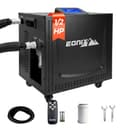
EONIX 1/2 HP Cold Plunge Chiller

EONIX 1/2 HP Cold Plunge Chiller

A 110V half-horse unit that plugs into an existing garage outlet. The honest entry point if you are not ready to pay an electrician.

Best for a bathtub
$369.99 · View on Amazon

Price as of July 26, 2026. #ad How we’re funded

2
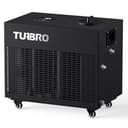
TURBRO 1 HP 9,300 BTU Cold Plunge Chiller

TURBRO 1 HP 9,300 BTU Cold Plunge Chiller

The only chiller here that publishes a BTU figure, which is the number that actually predicts pulldown. That transparency is why it leads.

Best pulldown for a cold tub
$1,399.00 · View on Amazon

Price as of July 26, 2026. #ad How we’re funded

3
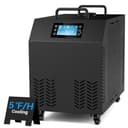
Fnova 1 HP Cold Plunge Chiller with Heater

Fnova 1 HP Cold Plunge Chiller with Heater

Reaches 37°F and doubles as a heater to 104°F, which makes a single unit serve contrast therapy without a second appliance.

Best if you also want it warm
$749.99 · View on Amazon

Price as of July 26, 2026. #ad How we’re funded

4
Treeshome 1/3 HP Ice Bath Water Chiller

Treeshome 1/3 HP Ice Bath Water Chiller

The cheapest way to stop buying ice. A 1/3 HP compressor is genuinely small — treat it as a temperature holder, not a puller.

Cheapest, with caveats
$274.99 · View on Amazon

Price as of July 26, 2026. #ad How we’re funded

5
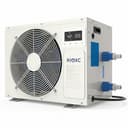
RIOXC 1.5 HP Cold Plunge Chiller

RIOXC 1.5 HP Cold Plunge Chiller

The largest compressor in this set and the only one rated to 500 gallons — the pick if your tub is oversized rather than average.

Overkill for a bathtub
$999.99 · View on Amazon

Price as of July 26, 2026. #ad How we’re funded

#1Best for a bathtub

EONIX 1/2 HP Cold Plunge Chiller

A 110V half-horse unit that plugs into an existing garage outlet. The honest entry point if you are not ready to pay an electrician.

Strengths

  • 110V — runs from a standard outlet, no electrician needed
  • Built-in filter and pump; insulated hoses included
  • Least expensive path to a chilled tub here

Trade-offs

  • 1/2 HP will pull down slowly on a large or uninsulated tub
  • Amperage is not published, so you cannot confirm circuit headroom from the listing
Compressor1/2 HP
Cooling capacityNot published
Minimum temperatureNot published
Heats as well as chillsNot published
Maximum volumeNot published
Voltage120V
AmperageNot published
Rated wattsNot published
Filtration includedYes
WarrantyNot published

Specifications as published by the manufacturer listing, read on July 16, 2026. Blank fields are specs the manufacturer does not publish.

#2Best pulldown for a cold tub

TURBRO 1 HP 9,300 BTU Cold Plunge Chiller

The only chiller here that publishes a BTU figure, which is the number that actually predicts pulldown. That transparency is why it leads.

Strengths

  • Publishes 9,300 BTU cooling capacity — almost no competitor states one
  • Dual filters and ozone generator included
  • Insulated pipes, wheels and handles for a garage setup

Trade-offs

  • Most expensive chiller in this comparison
  • Amperage and rated watts are not published
Compressor1 HP
Cooling capacity9,300 BTU
Minimum temperatureNot published
Heats as well as chillsNot published
Maximum volumeNot published
VoltageNot published
AmperageNot published
Rated wattsNot published
Filtration includedYes
WarrantyNot published

Specifications as published by the manufacturer listing, read on July 16, 2026. Blank fields are specs the manufacturer does not publish.

#3Best if you also want it warm

Fnova 1 HP Cold Plunge Chiller with Heater

Reaches 37°F and doubles as a heater to 104°F, which makes a single unit serve contrast therapy without a second appliance.

Strengths

  • Published 37°F floor — the coldest stated here
  • Heats to 104°F, so one unit covers both halves of contrast therapy
  • Cheaper than the other 1 HP units compared

Trade-offs

  • The listing publishes almost nothing beyond HP and temperature range
  • No stated BTU, amperage, or tub-size rating
Compressor1 HP
Cooling capacityNot published
Minimum temperature37°F
Heats as well as chillsYes
Maximum volumeNot published
VoltageNot published
AmperageNot published
Rated wattsNot published
Filtration includedNot published
WarrantyNot published

Specifications as published by the manufacturer listing, read on July 16, 2026. Blank fields are specs the manufacturer does not publish.

#4Cheapest, with caveats

Treeshome 1/3 HP Ice Bath Water Chiller

The cheapest way to stop buying ice. A 1/3 HP compressor is genuinely small — treat it as a temperature holder, not a puller.

Strengths

  • Lowest-cost chiller compared here
  • Filter and pump included

Trade-offs

  • 1/3 HP is the smallest compressor here — expect long pulldown
  • The listing publishes essentially no specifications beyond HP
Compressor1/3 HP
Cooling capacityNot published
Minimum temperatureNot published
Heats as well as chillsNot published
Maximum volumeNot published
VoltageNot published
AmperageNot published
Rated wattsNot published
Filtration includedYes
WarrantyNot published

Specifications as published by the manufacturer listing, read on July 16, 2026. Blank fields are specs the manufacturer does not publish.

#5Overkill for a bathtub

RIOXC 1.5 HP Cold Plunge Chiller

The largest compressor in this set and the only one rated to 500 gallons — the pick if your tub is oversized rather than average.

Strengths

  • 1.5 HP — the largest compressor compared here
  • Rated to 500 gallons
  • Published 42-105°F range covers heat as well as cold

Trade-offs

  • Oversized and overpriced for a standard 100-gallon tub
  • Amperage and rated watts are not published
Compressor1.5 HP
Cooling capacityNot published
Minimum temperature42°F
Heats as well as chillsYes
Maximum volume500 gallons
VoltageNot published
AmperageNot published
Rated wattsNot published
Filtration includedNot published
WarrantyNot published

Specifications as published by the manufacturer listing, read on July 16, 2026. Blank fields are specs the manufacturer does not publish.

Why a bathtub is the hardest tub to chill

No insulation. A purpose-built plunge tub has insulated walls and a cover; a bathtub has a single skin and an open top. Heat leaks in from the room the entire time, so the chiller has to run more just to hold a temperature, let alone reach one. In a warm bathroom, a small chiller may never catch up.

You start cold every time.Because you drain a bathtub after use, each session begins with a fresh, room-temperature fill. That means a full pulldown — the slow part — every single time, rather than the quick top-up an already-cold insulated tub needs. Plan to start the chiller a good while before you get in.

Volume you cannot shrink. With a dedicated tub you can buy the smallest size that fits you and cut your running cost. A bathtub is whatever size it is, and its shape is not built for immersion, so you may fill more water than you can actually get your shoulders under.

None of this makes a bathtub chiller a bad idea — it makes it a capacity question. Undersize the chiller and you will conclude it is broken when it is simply losing a race against heat gain. That is why the picks here lean toward more horsepower, and toward the one unit that publishes a real cooling figure in BTU rather than just a compressor rating.
Frequently asked questions

Can a cold plunge chiller cool a normal bathtub?

Yes, but a bathtub is close to the worst-case job you can give one, and it is honest to say so up front. A standard bathtub holds roughly 40-60 gallons and has essentially no insulation - a single skin of acrylic or porcelain against room air - so it gains heat continuously and a chiller has to keep working the whole time you are in it. Worse, you drain a bathtub after each use, so the chiller starts from room-temperature water every session rather than topping up an already-cold tub. It works; it is just slow and less efficient than the same chiller on a small insulated tub. Set your expectations accordingly, and start it well before you plan to get in.

What size chiller do I need for a bathtub?

More than you would guess, because the bathtub's lack of insulation works against you. A 1/3 HP unit will get there eventually but can take hours from a fresh fill, and may struggle to hold a low temperature against a warm bathroom. A 1/2 HP unit is the sensible floor for bathtub duty, and a 1 HP unit with a published cooling capacity - like the TURBRO's 9,300 BTU - is what you want if you care about being cold on demand rather than on a schedule. None of these publishes a bathtub-specific rating, because none is designed as a bathtub product; we are matching general chillers to the job.

Is it safe to run a chiller in a bathroom?

This is the caveat the listings skip, and it matters more here than anywhere else on the site because a bathroom combines mains electricity, water and a wet floor. Treat it seriously: plug the chiller into a GFCI-protected outlet, keep the unit itself out of any splash zone and off a wet floor, never run the cord across standing water, and follow the manufacturer's manual over anything written here. If you are adding an outlet or are unsure your bathroom circuit has the headroom and protection, have a licensed electrician confirm it before you buy. When in doubt, site the chiller in a garage or utility room and run the hoses to the tub.

Do I need a dedicated circuit for a bathtub chiller?

None of these five publishes an amperage figure, which is itself the finding - you cannot confirm the draw from the listing. The EONIX is explicitly 110V and designed to plug into a standard outlet, which is why it leads for bathroom use, but a bathroom's outlets are shared 15-20A GFCI circuits that may also feed a hair dryer or heater, so headroom is not guaranteed. Ask the manufacturer for the nameplate draw before you buy, and if you are running a larger unit, treat a dedicated circuit as the safe default. Our electrical section covers how to reason about the load.

Would a dedicated cold plunge tub be better than chilling my bathtub?

For most people, yes - and it is the honest recommendation even on a page about bathtub chillers. A purpose-built insulated tub holds temperature with far less chiller effort, keeps its water between sessions so you are not chilling from scratch every time, and keeps the electricity out of your bathroom. Chilling a bathtub makes sense when you cannot site a tub anywhere else, or you want to try cold plunging with equipment you already own. If you find you use it, an insulated tub is the upgrade that lowers both your running cost and your risk.

How much will it cost to run?

Less per hour than people expect, because a chiller cycles rather than running flat out - but a bathtub pushes that number up, because the poor insulation means more cycling to hold temperature, and the daily drain-and-refill means a full pulldown every session. None of these five publishes a rated wattage, so we will not invent one. We work the running-cost method through in full on the cost-to-run page using the EIA national average of 18.83 cents/kWh, and let you substitute your own utility rate.

Related

Sources