

#1Same published 425 cu.ft ceiling, far less money
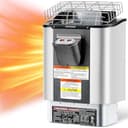
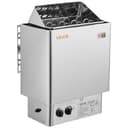
Mxmoonant 9kW 220V Digital Sauna Heater
9kW and 425 cu.ft published — the same room rating as the 8kW Harvia at a fraction of the price, with digital control.
Strengths
- Publishes a 425 cu.ft maximum room volume
- Digital control with hygrothermograph included
- 9kW for well under the price of the 8kW Harvia
Trade-offs
- 9kW at 240V requires a 50A dedicated circuit — the most demanding here
- Listed at 220V; confirm compatibility with your 240V supply
| Who it's for | Large rooms on a budget |
|---|---|
| Heat source | Electric element |
| Rated output | 9 kW |
| Room volume (as published) | up to 425 cu.ft |
| Room volume at 50 cu.ft/kW (computed) | about 450 cu.ft |
| Stone capacity | Not published |
| Voltage | 240V |
| Amperage stated on the listing | Not published |
| Circuit required, NEC 125% (computed) | 50A dedicated |
| Control | Digital |
| Warranty | Not published |
Specifications as published by the manufacturer listing, read on July 16, 2026. Blank fields are specs the manufacturer does not publish.