ICE & CEDAR

The best cold plunge socks and gloves, compared

Your hands and feet hurt first and quit first. A few millimetres of neoprene is the cheapest upgrade that buys you time in the water - here is what to look for.

Last verified · Ice & Cedar editorial

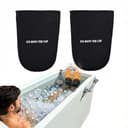
If a cold plunge ends before you want it to, it is usually your hands or your feet that call it. They have the most surface area, the least insulating fat and the densest nerve supply of anywhere on your body, so they lose heat fastest and ache first. A few millimetres of neoprene traps a thin film of water against the skin that warms to body temperature and takes the sharp edge off — which makes extremity protection the cheapest upgrade in the whole cold-plunge world.

It is also the most commoditised. This is dive gear sold into the recovery aisle: the only spec that changes the outcome is neoprene thickness, in millimetres, paired with what the item actually covers. Everything else — the detox language, the “recovery” branding — is packaging. And even the one spec that matters is inconsistently published: 4 of the 5 products here state a thickness, and one states none at all. So the ranking below leans on coverage, thickness and whether the seller will tell you what you are buying.

One caveat up front, because none of the listings will say it: covering your extremities changes what you feel, and that feeling is part of the signal that tells you when to get out. Use these to make a sensible plunge comfortable, not to push far past your normal time. Keep to the published temperature and duration guidance and treat the socks as comfort, not a licence to overstay.

We have not tested any of these; we own none of them. Here is exactly what we do instead. Every specification below was read from the manufacturer’s own Amazon listing on the date printed on each card, every unit was in stock when it was read, and every price is live.

Quick picks

Ranked on published specifications. Select a row to jump to the full write-up. We have not tested these units — here is exactly what we do instead.

#ProductBest forPrice
1
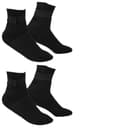
Unittype Cold Plunge Socks, 3mm Neoprene (2 Pairs)

Unittype Cold Plunge Socks, 3mm Neoprene (2 Pairs)

The best all-round pick: a full-foot 3mm neoprene sock with a genuinely non-slip textured sole, and you get two pairs, so one can dry while you wear the other. It publishes its measurements — a 9.45-inch sole and a 6.7-inch leg — which most of these do not.

Best overall
$23.99 · View on Amazon

Price as of July 26, 2026. #ad How we’re funded

2
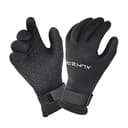
XUKER Water Gloves, 3mm Neoprene Five-Finger

XUKER Water Gloves, 3mm Neoprene Five-Finger

If it's your hands that end the session, these are the fix: 3mm five-finger neoprene gloves with an anti-slip palm and an adjustable wrist strap to keep water out. Sized XS to 2XL, so you can actually get the close fit that makes a glove warm.

Best for hands
$19.99 · View on Amazon

Price as of July 26, 2026. #ad How we’re funded

3
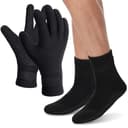
Chicingyou Neoprene Gloves and Socks Set, 3mm

Chicingyou Neoprene Gloves and Socks Set, 3mm

The one-box answer for both ends: a 3mm glove-and-sock set with adjustable straps on all four pieces. It's the cheapest way to cover hands and feet at once, and the straps are what keep the cold water from flushing through.

Best hands + feet set
$21.99 · View on Amazon

Price as of July 26, 2026. #ad How we’re funded

4
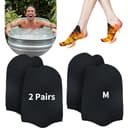
GFYYBKJ Ice Bath Toe Covers, 4mm Neoprene (2 Pairs)

GFYYBKJ Ice Bath Toe Covers, 4mm Neoprene (2 Pairs)

The budget pick and the thickest neoprene here at 4mm — but it covers only your toes, not the whole foot. For a lot of people the toes are exactly where the pain is, and at this price with two pairs in the box, it's the cheapest way to test whether extremity cover changes your session.

Best budget
$9.99 · View on Amazon

Price as of July 26, 2026. #ad How we’re funded

5
Caplide Ice Bath Toe Covers

Caplide Ice Bath Toe Covers

A minimalist toe cover from the brand you'll recognise from our water-treatment page. It makes the most honest case in the category — the toes have the least fat and the most exposed nerve endings, so they hurt first — but it publishes neither a neoprene thickness nor a pair count, so you're buying the idea more than the spec.

Best minimalist toe cover
$9.99 · View on Amazon

$11.9917% off

Price as of July 26, 2026. #ad How we’re funded

#1Best overall

Unittype Cold Plunge Socks, 3mm Neoprene (2 Pairs)

The best all-round pick: a full-foot 3mm neoprene sock with a genuinely non-slip textured sole, and you get two pairs, so one can dry while you wear the other. It publishes its measurements — a 9.45-inch sole and a 6.7-inch leg — which most of these do not.

Strengths

  • Full-foot coverage in 3mm neoprene with an elastic ankle cuff to limit flushing
  • Textured non-slip sole — real grip on a wet tub floor or tile
  • Two pairs in the box, so one dries while the other is in use
  • Publishes actual measurements, unlike most listings here

Trade-offs

  • Listed in size L only — check the stated 9-10 shoe-size fit before buying
  • 3mm is mid-weight; very cold water will still reach your feet eventually
  • No temperature rating published (none in this category publishes one)
CoversFull foot
Neoprene thickness3 mm
Sizes offeredL (US men's/women's 9-10)
In the box2 pairs
Non-slip soleYes
Adjustable strapNo
Temperature ratingNot published

Specifications as published by the manufacturer listing, read on July 26, 2026. Blank fields are specs the manufacturer does not publish.

#2Best for hands

XUKER Water Gloves, 3mm Neoprene Five-Finger

If it's your hands that end the session, these are the fix: 3mm five-finger neoprene gloves with an anti-slip palm and an adjustable wrist strap to keep water out. Sized XS to 2XL, so you can actually get the close fit that makes a glove warm.

Strengths

  • Five-finger 3mm neoprene with an anti-slip printed palm — you keep your grip
  • Adjustable wrist strap to minimise water entry, which is what keeps hands warm
  • The widest size range here (XS-2XL), so a close fit is achievable
  • Blind-stitched seams for durability

Trade-offs

  • Five separate fingers lose heat faster than a mitten would
  • One pair, not two
  • No temperature rating published
CoversHands
Neoprene thickness3 mm
Sizes offeredXS-2XL
In the box1 pair
Non-slip solen/a
Adjustable strapYes
Temperature ratingNot published

Specifications as published by the manufacturer listing, read on July 26, 2026. Blank fields are specs the manufacturer does not publish.

#3Best hands + feet set

Chicingyou Neoprene Gloves and Socks Set, 3mm

The one-box answer for both ends: a 3mm glove-and-sock set with adjustable straps on all four pieces. It's the cheapest way to cover hands and feet at once, and the straps are what keep the cold water from flushing through.

Strengths

  • One pair of gloves and one pair of socks in a single 3mm set
  • Adjustable straps on all four pieces to reduce water flow-through
  • The lowest-cost way to protect hands and feet together
  • Flexible enough to move in, per the listing's ergonomic cut

Trade-offs

  • Only 13 in stock when we read it (2026-07-26)
  • Socks have no stated non-slip sole, so they are less grippy than a dedicated sock
  • Sizing runs S-L only; larger hands and feet may not fit
  • No temperature rating published
CoversHands + feet
Neoprene thickness3 mm
Sizes offeredS-L
In the box1 pair
Non-slip soleNot published
Adjustable strapYes
Temperature ratingNot published

Specifications as published by the manufacturer listing, read on July 26, 2026. Blank fields are specs the manufacturer does not publish.

#4Best budget

GFYYBKJ Ice Bath Toe Covers, 4mm Neoprene (2 Pairs)

The budget pick and the thickest neoprene here at 4mm — but it covers only your toes, not the whole foot. For a lot of people the toes are exactly where the pain is, and at this price with two pairs in the box, it's the cheapest way to test whether extremity cover changes your session.

Strengths

  • The thickest neoprene here at 4mm, and the cheapest option on the page
  • Two pairs in the box across S/M/L sizing
  • Targets the toes, which for many people are the first thing to hurt
  • Lock-stitched seams stated for durability

Trade-offs

  • Covers toes only — the rest of the foot is exposed
  • No sole, so no grip and no protection for the heel
  • No temperature rating published
CoversToes only
Neoprene thickness4 mm
Sizes offeredS / M / L
In the box2 pairs
Non-slip soleNot published
Adjustable strapNo
Temperature ratingNot published

Specifications as published by the manufacturer listing, read on July 26, 2026. Blank fields are specs the manufacturer does not publish.

#5Best minimalist toe cover

Caplide Ice Bath Toe Covers

A minimalist toe cover from the brand you'll recognise from our water-treatment page. It makes the most honest case in the category — the toes have the least fat and the most exposed nerve endings, so they hurt first — but it publishes neither a neoprene thickness nor a pair count, so you're buying the idea more than the spec.

Strengths

  • Targeted toe protection to extend how long you can stay in
  • One-size 'fits most' simplicity
  • From a brand that also makes the test strips on our water-care page

Trade-offs

  • Publishes no neoprene thickness — the one spec that matters here
  • No pair count stated, and one-size sizing is coarse
  • Toes only; no sole and no heel cover
  • No temperature rating published
CoversToes only
Neoprene thicknessNot published
Sizes offeredMedium (fits most)
In the boxNot published
Non-slip soleNot published
Adjustable strapNo
Temperature ratingNot published

Specifications as published by the manufacturer listing, read on July 26, 2026. Blank fields are specs the manufacturer does not publish.

How to choose cold plunge socks or gloves

Coverage first, matched to where it hurts. Be honest about your own weak point. For most people it is the feet, and the toes specifically, which is why toe covers are the cheapest entry. A full-foot sock protects the whole foot and usually adds a sole; gloves are for people whose hands end the session, which tends to be anyone plunging to the shoulders. A combined set covers both ends for the least money. Buy for your limiting factor, not for the most gear.

Then thickness, because it is the one real spec. Neoprene is rated in millimetres, and 3mm is the flexible mid-weight most people want — warm enough to matter, thin enough to move in. 4mm is warmer but stiffer and, in this set, only covers toes. Thicker keeps you warmer for longer but costs dexterity, which matters more for gloves than for socks. Where a listing does not publish a thickness, treat that as a reason to pick one that does.

Then the sole, if it is a sock. A textured, non-slip sole is worth more than it looks: a tub or a tiled bathroom floor is wet and cold, and neoprene with no grip is a slip risk getting in and out. A proper sole also protects the sole of your foot from a cold, hard tub base. Toe covers and gloves have no sole to speak of, which is one more reason a full sock is the safer everyday choice.

Then the fit and the strap.Neoprene only works if it fits close — a loose sock or glove flushes cold water through and does nothing. A real size range (one glove here runs XS–2XL) lets you get that fit, and an adjustable wrist or ankle strap keeps the cold water out during the shock of entry. Loose-and-cheap beats nothing, but close-and-strapped is what actually keeps you warm.

Buy two pairs if you plunge often. Neoprene put away wet in a bag degrades fast, so a rotation matters. Two of the products here ship as two-pair packs for barely more than a single, which is the practical win: one pair dries flat while the other is in use, and the set lasts far longer than a single pair used every day.

Frequently asked questions

Do cold plunge socks and gloves actually work?

For comfort, yes - and the reason is physics, not marketing. Your hands and feet have a lot of surface area, very little insulating fat, and a dense network of nerve endings and small blood vessels, so they lose heat fast and hurt first. A few millimetres of neoprene traps a thin layer of water against the skin that warms to body temperature, which blunts the sharp ache in the extremities and lets most people stay in more comfortably. What they do not do is make the water less cold or the practice more effective - they change how long you can tolerate it, not what it does.

What thickness of neoprene should I get?

Thickness is the one spec that predicts warmth, and it is measured in millimetres. The gear here runs 3-4mm: 3mm is the flexible mid-weight most people want for socks and gloves, and 4mm is warmer but stiffer and covers only toes in this set. Thicker neoprene keeps you warmer for longer but reduces dexterity and grip, which matters more for gloves than socks. Annoyingly, 4 of the 5 products here publish a thickness at all - one states none - so where a listing is silent, treat that as a gap and buy the one that tells you.

Socks, toe covers, or gloves - what do I actually need?

Start with wherever it hurts. For most people that is the feet, and specifically the toes, which is why toe covers exist as the cheapest entry point. A full-foot sock protects the whole foot and usually adds a non-slip sole, which is worth having on a wet tub floor. Gloves are for people whose hands are the limiting factor - often anyone submerging to the shoulders. If both ends bother you, a combined glove-and-sock set is the cheapest way to cover everything. There is no single right answer; buy for your own weak point, not the most gear.

Will wearing these reduce the benefits of a cold plunge?

This is the honest caveat the listings skip. Covering your extremities changes what you feel, and the discomfort in your hands and feet is part of the signal that tells you when you have had enough. Take that signal away and it becomes easier to stay in too long - which is a genuine safety point, not a purity one. Use extremity protection to make a sensible plunge tolerable, not to push far past your normal time. Keep to the published duration guidance, get out on time or when your body says so, and treat the socks as comfort, not a licence to overstay. Our cold plunge temperature and duration pages cover the numbers.

Can I use them for ice baths and open water too?

Yes - this is general cold-water neoprene, and every listing here also lists diving, surfing, swimming and cold-weather sports as uses. That is a point in their favour: the same 3mm socks that make an ice bath tolerable will keep your feet warm on a cold-water swim. It is also a reminder that none of this is cold-plunge-specific technology; it is dive gear sold into the recovery aisle, which is exactly why the prices are low and the specs are thin.

How long do they last, and how do I care for them?

Neoprene's enemies are chlorine, hard folding and being put away wet, and none of these listings publishes a warranty, so treat them as consumables. Rinse them in fresh water after a session, especially if you treat your plunge water, and dry them flat rather than balled up in a bag - which is a large part of why the two-pair packs here are good value, since you can rotate a dry pair in while the other dries. The seams and any straps are what fail first; a lock-stitched or blind-stitched seam, which a couple of these state, lasts longer than a glued one.

Related

Sources

  • Manufacturer listings for all five products (Amazon detail pages)Every specification above was read from the manufacturer's own listing title and feature bullets on 2026-07-26 and is linked per product on each card. Blank fields are specs the manufacturer does not publish; no listing in this category publishes a temperature rating. (accessed 2026-07-26)